
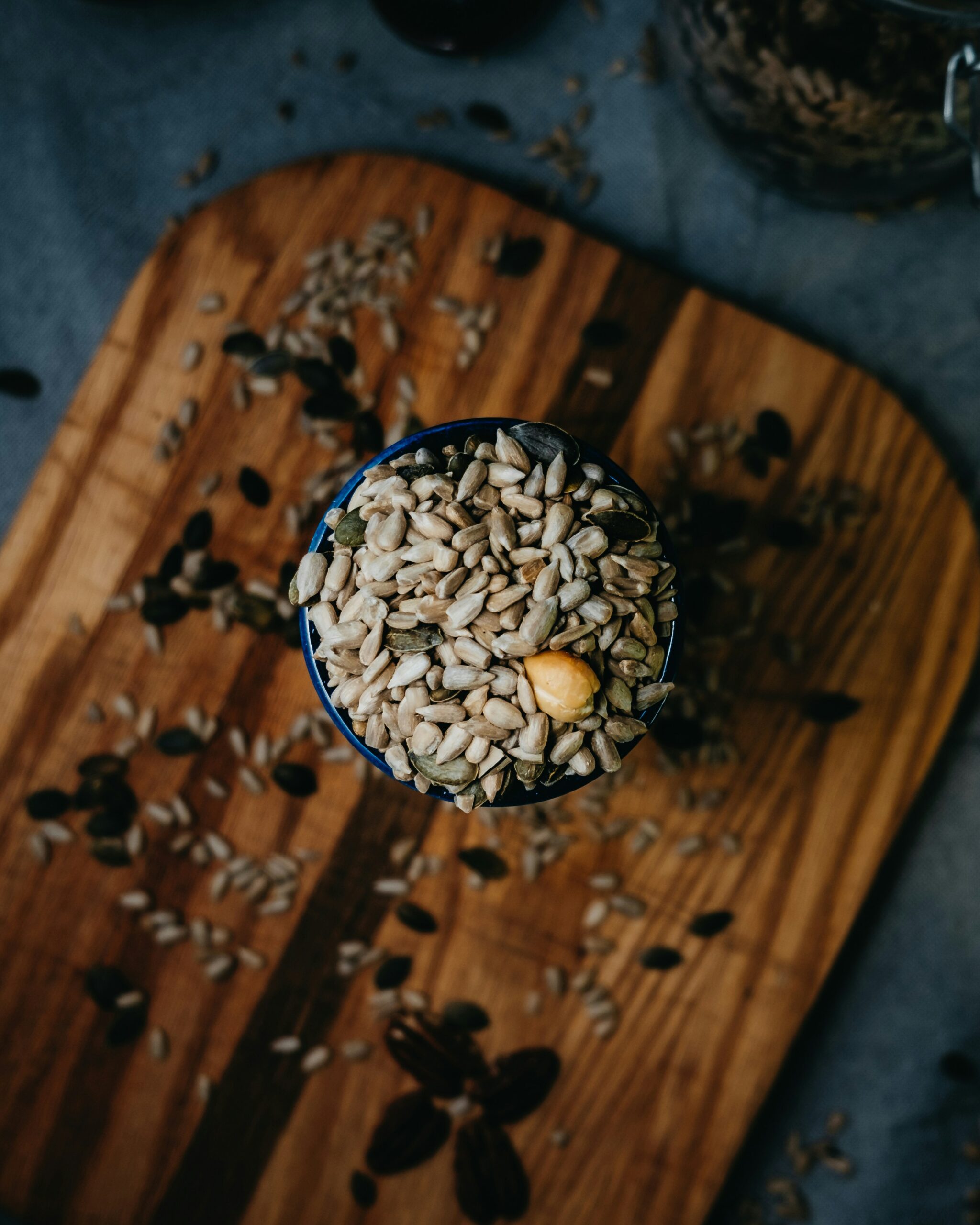
Botanically, a “seed” is the reproductive unit of a flowering plant, and by that definition, a substantial share of the human food supply qualifies. Cereals such as wheat, rice, and oats (botanically caryopses); single-seeded fruits in which the ovary wall has fused to the seed coat, are seeds; so are legumes like lentils, chickpeas, and soybeans; coffee beans, cocoa beans, and spices including cumin, coriander, and mustard are all seeds; even almonds and cashews are, technically, the seeds of drupe fruits. The category is vast.
Within this Bem Bloom’s Ingredient Profile Series, that broader territory is treated across multiple distinct categories rather than collapsed into one. This article focuses on a comparatively narrow group: the seeds most consistently recognised in nutrition research and industry reporting as functional whole-seed ingredients consumed in their own right.
A 28-gram serving of chia provides nearly 5 grams of omega-3 ALA; a tablespoon of ground flaxseed supplies lignans in concentrations hundreds of times higher than any other common food; a handful of pumpkin seeds meets a significant share of daily magnesium and zinc requirements. The shortlist that emerges: chia, flax, hemp, pumpkin, sunflower, and sesame, shares a recognisable pattern: high lipid density, meaningful plant protein content, abundant fibre, and a catalogue of bioactive compounds whose health relevance is supported by an expanding body of peer-reviewed evidence.
1. What Defines a Culinary Seed
Botanically, a seed is the reproductive unit of a flowering plant: an embryo, a nutrient reserve (endosperm or cotyledons), and a protective coat. The nutrient reserve, the tissue the plant packs with oils, proteins, and minerals to launch the next generation, is also the reason seeds are so nutritionally dense for human consumption. Every seed must contain, in concentrated form, everything a seedling needs to begin life.
Commercial and culinary usage narrows the botanical definition to seeds that are consumed whole or minimally processed as food ingredients rather than extracted for oil only, used primarily for planting, or classified as cereals. The six seeds profiled in this article meet four working criteria:
- Established dietary use as whole-seed ingredients across multiple culinary traditions;
- Peer-reviewed evidence linking regular consumption to measurable nutritional or health outcomes;
- Commercial availability in organic and conventional formats through global supply chains;
- Distinct nutritional profile that sets each apart within the category rather than duplicating another seed’s role.
Applying these criteria yields a practical, non-exhaustive shortlist: chia, flax, hemp, pumpkin, sunflower, and sesame.
2. Major Varieties and Origins
2.1 Chia (Salvia hispanica)
Chia is the seed of Salvia hispanica, a flowering mint-family plant native to central and southern Mexico and Guatemala. It was a staple food and ritual crop of the Aztec and Mayan civilisations. Commercial production today is concentrated in Paraguay, Bolivia, Argentina, Mexico, and Australia. The seed is small (1-2 mm), typically black or white, and develops a gelatinous mucilage coat when hydrated, a property central to both its culinary use and its soluble-fibre content.
2.2 Flaxseed (Linum usitatissimum)
Flaxseed (also called linseed) is one of the oldest cultivated crops, domesticated in the Fertile Crescent around 7,000 BCE for both fibre and food. Russia, Kazakhstan, Canada, and China dominate current global production, with Russia accounting for roughly 40-45% of world output in recent FAOSTAT data. The seed is flat and oval, ranging from golden to reddish brown. Its defining nutritional feature is one of the highest known concentrations of alpha-linolenic acid among commonly consumed whole foods, paired with uniquely high levels of lignans.
2.3 Hemp (Cannabis sativa)
Hemp seeds are the fruits of industrial Cannabis sativa, varieties bred to contain negligible tetrahydrocannabinol (THC) and cultivated for fibre, oil, and food. Canada, France, and China are the leading producers. Hulled hemp seeds (often sold as “hemp hearts”) have a soft, nutty texture and a protein profile that includes all nine essential amino acids which, together with an omega-6 to omega-3 ratio close to 3:1, contributes to their distinct nutritional profile within the category.
2.4 Pumpkin Seeds (Cucurbita pepo)
Pumpkin seeds (pepitas when hulled) come primarily from Cucurbita pepo varieties, with the hull-less “Styrian” cultivar, grown mainly in Austria, Slovenia, and Hungary, valued for its dark-green kernel and high oil quality. China, India, and Mexico account for the largest global volumes. Pumpkin seeds are notable for their concentrations of magnesium, zinc, and plant sterols.
2.5 Sunflower Seeds (Helianthus annuus)
Sunflower seeds come from Helianthus annuus, a plant domesticated in what is now the United States around 3,000 BCE. Ukraine, Russia, Argentina, and Romania are the principal producers today. The seed is eaten in two main forms: striped (kernel-focused, often roasted and salted as a snack) and black oil (smaller, with higher oil content, used mostly for pressing). Sunflower seeds are among the richest dietary sources of vitamin E.
2.6 Sesame (Sesamum indicum)
Sesame seeds are one of the oldest known oilseed crops, with evidence of cultivation in the Indian subcontinent dating to at least 3,000 BCE. Sudan, Myanmar, India, Tanzania, and Nigeria lead global production. The seed comes in colours from pale ivory to black, each with slightly different flavour profiles. Sesame is particularly rich in calcium, with most of it concentrated in the outer coat: one tablespoon (~9 g) of unhulled sesame supplies roughly 88 mg of calcium, while the same volume of hulled sesame retains only about 11 mg. Sesame also contains the lignans sesamin and sesamolin, which are studied for cardiometabolic effects.
3. The Nutritional Science of Seeds
The following Chart compares the nutritional composition of these seeds in various forms (values per 100g):
14 entries across 5 seed families · Per 100 g
Source: USDA FoodData Central SR Legacy · All values per 100 g · % DV based on FDA 2,000 kcal/day reference · 0 values may indicate unmeasured, not absent
3.1 Essential Fatty Acids
Culinary seeds are among the most reliable plant-based vehicles for alpha-linolenic acid (ALA), one of the two essential fatty acids, alongside linoleic acid (LA), that the human body cannot synthesise and must obtain from diet. Flaxseed and chia are exceptional in this regard: 30 g of flaxseed supplies roughly 7 g of ALA, and 30 g of chia supplies around 5 g, multiples of the 1.1-1.6 g daily adequate intake set by the U.S. National Academies. Hemp provides a smaller absolute amount (~2.6 g per 30 g) but a more balanced omega-6 to omega-3 ratio.
Sunflower, pumpkin, and sesame are dominated by linoleic acid (omega-6) rather than ALA. This does not make them nutritionally inferior; it means their role is different. They contribute monounsaturated and polyunsaturated fats, vitamin E, and bioactive phytochemicals, but they are not a meaningful omega-3 source.
3.2 Plant Protein
Seed protein content ranges from around 17% (chia, flax, sesame) to close to 32% (hemp, on a dry-weight basis). Hemp protein is particularly noteworthy because it provides all nine essential amino acids in meaningful amounts, placing it among the few single plant foods to do so. Pumpkin seeds provide a broad essential amino-acid spectrum and are notably rich in tryptophan, a precursor to serotonin and melatonin.
3.3 Dietary Fibre
Chia and flax lead the category in fibre density, with both soluble and insoluble fractions. Chia’s soluble fibre is predominantly mucilage, the gel that forms when the seed is hydrated, which slows gastric emptying and has been studied for its effects on postprandial glucose. Flaxseed fibre includes both viscous soluble fibre and lignans that act as prebiotic substrates in the colon. Evidence from randomised trials suggests that regular flaxseed consumption can modestly reduce LDL cholesterol and improve markers of glycaemic control, effects that are thought to be mediated in part by the fibre fraction.
3.4 Vitamins and Minerals
Each seed has a distinct micronutrient signature. Sunflower seeds deliver one of the highest dietary concentrations of vitamin E (alpha-tocopherol), with 30 g providing nearly half the adult reference intake. Pumpkin seeds are a leading plant source of magnesium and zinc. Sesame (unhulled) is among the most calcium-dense whole foods on a per-gram basis. Flaxseed and chia contribute meaningful manganese, phosphorus, and selenium. Hemp provides a balanced mix of magnesium, iron, and zinc alongside its protein.
3.5 Bioactive Compounds
Beyond standard nutrients, seeds contain a class of compounds whose biological effects are under active investigation:
- Lignans: polyphenolic compounds with weak phytoestrogenic activity. Flaxseed contains secoisolariciresinol diglucoside (SDG) at concentrations 75-800 times higher than any other dietary source.
- Phytosterols: plant compounds structurally similar to cholesterol that reduce cholesterol absorption in the gut. Pumpkin and sesame seeds are among the richest dietary sources.
- Sesamin and sesamolin: sesame-specific lignans studied for their antioxidant and lipid-modulating effects.
- Carotenoids (lutein, zeaxanthin): present in meaningful amounts in pumpkin and sunflower seeds.
4. Documented Health Outcomes
The evidence base linking seeds to measurable health outcomes has expanded substantially over the past two decades. The following summaries reflect the weight of peer-reviewed findings.
4.1 Cardiovascular Health
The strongest human-intervention evidence concerns cardiovascular endpoints, particularly for flaxseed. Regular flaxseed consumption is associated with modest reductions in total and LDL cholesterol, improvements in systolic and diastolic blood pressure, and lower markers of vascular inflammation. Evidence for chia is more mixed, with several trials showing neutral effects on lipid markers and others reporting modest improvements when consumed regularly alongside a balanced diet.
Multiple meta-analyses of flaxseed interventions have reported significant reductions in total and LDL cholesterol, with the magnitude depending on baseline lipid status, dose, and the form consumed: whole-seed and lignan supplements show stronger effects than flaxseed oil, and effects are typically more pronounced in individuals with elevated baseline cholesterol and at doses up to 30 g/day over 8-12 weeks.
4.2 Metabolic Health
Seeds with high viscous fibre content (chia, flax) can blunt postprandial glucose and insulin responses when consumed with carbohydrate-rich meals. Trials in adults with type 2 diabetes have shown small but statistically meaningful improvements in HbA1c and fasting glucose over 12-week interventions. The mechanism is thought to combine delayed gastric emptying, reduced carbohydrate absorption rate, and possibly alterations in the gut microbiota.
4.3 Digestive Health
Whole seeds, particularly chia and flax, are dense sources of total dietary fibre. A 30 g serving of chia provides over 10 g of fibre, more than a third of the 25 g daily intake recommended for adults under European Food Safety Authority dietary reference values. Under EU Regulation (EC) No 1924/2006, a food may be labelled “high in fibre” if it provides at least 6 g of fibre per 100 g (or 3 g per 100 kcal), a threshold that whole seeds easily meet on a per-ingredient basis. The combined soluble and insoluble fibre from whole seeds supports stool bulk, colonic transit time, and microbial fermentation.
4.4 Hormonal and Inflammatory Health
Flaxseed lignans, once metabolised by gut bacteria into the mammalian lignans enterodiol and enterolactone, exhibit weak oestrogenic and anti-oestrogenic activity depending on the hormonal environment. This has generated interest in their role in menopausal symptoms and hormone-sensitive cancers. The evidence is mixed and should be interpreted cautiously: observational associations are more consistent than interventional trial results, and anyone with hormone-sensitive conditions should consult a clinician before using flaxseed at high doses.
5. Culinary Applications and Practical Use
The nutritional profile of seeds only matters if they are actually consumed, and consumed in forms that preserve their nutrients. A few practical principles:
5.1 Preparation
- Flaxseed must be ground to release its omega-3 and lignan content. Whole flaxseeds largely pass through the gut intact. Grinding immediately before use is ideal; pre-ground flax should be refrigerated and used within a few weeks.
- Chia can be used whole or hydrated. Stirring into liquid at a ratio of roughly 1 part seed to 10 parts liquid produces a gel within 10-15 minutes, useful as an egg substitute in baking and as a thickener.
- Pumpkin and sunflower seeds are typically roasted for flavour; light roasting (under 150°C) preserves most of the vitamin E and bioactive content, whereas high-heat roasting degrades unsaturated fats.
- Sesame is used whole, ground into tahini, or pressed for oil. Hulled (white) sesame has a milder flavour; unhulled sesame retains more calcium.
- Hemp hearts require no preparation. They can be eaten raw and do not tolerate high-temperature cooking well, the unsaturated fats degrade.
5.2 Storage
All seeds are rich in unsaturated fats and therefore vulnerable to oxidation. Whole seeds stored in airtight containers away from light and heat keep for 6-12 months; ground seeds and seed butters are more perishable and benefit from refrigeration. Oxidised seeds develop a bitter, paint-like off-flavour that is an accurate sensory marker of rancidity.
5.3 Typical Serving Sizes
A practical daily range across most nutritional guidance is 15-30 g per day (roughly one to two tablespoons) of any combination of seeds. This level is sufficient to deliver meaningful ALA, fibre, and micronutrients for most adults. Higher intakes are not inherently harmful for healthy individuals but offer diminishing nutritional returns alongside meaningful caloric load, at 5-6 kcal per gram, seeds are calorie-dense, and 30 g already supplies 150-175 kcal.
6. Precautions and Considerations
Seeds are well tolerated by the great majority of consumers, but the category carries a small number of safety considerations that matter at the product-development, label-claim, and end-user levels. The points below are the ones most consistently raised in regulatory documents and clinical literature.
6.1 Allergens
One of the six seeds in this article are formally recognised as priority food allergens.
- Sesame was designated the ninth major food allergen in the United States under the FASTER Act, effective 1 January 2023, joining the eight allergens previously listed under FALCPA (milk, eggs, fish, crustacean shellfish, tree nuts, peanuts, wheat, soybeans). In the European Union, sesame has long been included among the 14 substances listed in Annex II of Regulation (EU) 1169/2011 that must be declared on food labels. Sesame allergy is rising in prevalence and reactions can be severe.
Other seeds in this pillar are not formally listed as priority allergens, but isolated case reports describe IgE-mediated reactions to sunflower, pumpkin, and hemp seeds, particularly in individuals with established allergies to other Asteraceae or Cucurbitaceae plants. Cross-reactivity between mugwort pollen and sunflower seed has been documented.
6.2 Cyanogenic Glycosides in Flaxseed
Raw or finely ground flaxseed contains cyanogenic glycosides, primarily linustatin and neolinustatin, that release small amounts of cyanide when the seed is crushed and the enzyme β-glucosidase acts on them.
The practical implication is straightforward: heat treatment (baking, toasting, boiling) inactivates β-glucosidase and effectively mitigates the risk in typical cooked applications, which covers the great majority of culinary use. Raw, finely ground flaxseed consumed uncooked is best used in moderate amounts and not in single high doses; typical culinary use distributed across meals remains within safe exposure levels.
6.3 Anti-Nutrients
Like most seeds and whole grains, the species in this article contain compounds that can reduce the bioavailability of certain nutrients:
- Phytate (phytic acid) binds calcium, iron, zinc, and magnesium in the gut, reducing absorption. Flaxseed, sunflower, and sesame seeds can contain relatively high levels of phytate within this category, with pumpkin and chia somewhat lower; ranges depend on cultivar and processing.
- Oxalate binds calcium and may contribute to kidney-stone risk in susceptible individuals at very high intakes. Sesame and chia can contain notable levels of oxalate, though again with substantial cultivar and method variability.
- Trypsin and protease inhibitors present at low levels in raw seeds; largely inactivated by heat.
At typical 15-30 g daily intakes within a varied diet, anti-nutrient effects are modest and unlikely to drive deficiency in healthy adults. Soaking, sprouting, fermenting, and roasting all reduce these compounds. The case where anti-nutrients matter most is in populations whose diet relies heavily on a single seed and who have limited intake of the affected minerals from other sources.
6.4 Hormone-Sensitive Conditions, Pregnancy, and Drug Interactions
Several considerations apply to specific populations rather than the general consumer:
- Hormone-sensitive conditions. Flaxseed lignans have weak phytoestrogenic activity. Anyone with oestrogen-receptor-positive breast cancer, endometriosis, or other hormone-sensitive conditions may wish to discuss flaxseed intake with a clinician, particularly at higher doses (above ~30 g/day) on a sustained basis.
- Pregnancy. There is no consensus that culinary amounts of any seed in this article pose a risk in pregnancy, and most are routinely consumed safely. Some clinical guidance suggests caution with high-dose flaxseed supplementation during pregnancy due to the lignan and ALA content; whole-seed culinary use within the 15-30g range is generally considered acceptable.
- Anticoagulants and antiplatelets. Clinical case reports and pharmacological monographs suggest a potential for enhanced anticoagulation with chia, including a 2021 case report of warfarin interaction; the chia entry in the Wolters Kluwer Natural Products monograph advises caution with concurrent use of warfarin, aspirin, or clopidogrel without clinical oversight. Flaxseed has a comparable theoretical mechanism via omega-3 ALA but a less well-documented case-report record. Consumers on these medications should keep intake stable, watch for unusual bleeding, and inform their clinician.
- Hemp seeds and THC. Commercial hulled hemp seeds and hemp protein contain only trace amounts of THC, well below thresholds associated with intoxication. Isolated and uncommon cases of positive workplace drug screens have been reported, typically associated with very high intakes or unprocessed products. Individuals subject to drug testing should be aware of this rare possibility.
6.5 Choking, Infant Feeding, and Mechanical Hazards
- Chia gel and oesophageal obstruction. Dry chia seeds expand to roughly ten times their volume when hydrated. Case reports describe oesophageal obstruction in adults who consumed a tablespoon of dry chia followed immediately by water, hydration occurs in the oesophagus rather than prior to ingestion. The simple rule is to always pre-hydrate chia (at least 10-15 minutes in liquid) before consuming it, and never swallow dry chia chased with water.
- Whole seeds and young children. Whole flaxseed, sunflower, pumpkin, and sesame seeds are choking hazards for infants and toddlers under four, consistent with American Academy of Pediatrics choking-prevention guidance. Ground flaxseed, tahini, hemp hearts, and chia hydrated into food matrices are appropriate alternatives at this age. As always, paediatric introduction of any new food should follow current age-appropriate guidance.
7. Sustainability Profile
Seeds compare favourably to most animal-derived sources of protein and fat on water, land, and greenhouse-gas metrics, but the category is not uniform. Three considerations are worth flagging for procurement and product teams:
- Land-use intensity. Sunflower and flax are broad-acre rotation crops with modest per-hectare environmental footprints. Chia, hemp, and sesame are more specialised and often rely on irrigated or labour-intensive cultivation. Paraguayan chia in particular is grown within the Gran Chaco, a region under severe deforestation pressure, though that pressure is overwhelmingly attributable to cattle ranching and soybean cultivation rather than to chia itself. Sourcing chia from this region therefore warrants the same scrutiny as any commodity from an active deforestation frontier.
- Organic certification. Certified-organic cultivation avoids synthetic pesticide and fertiliser inputs. It does not, on its own, address issues of land conversion, water use, or labour conditions, which require complementary certifications or direct supply-chain engagement.
- Byproduct valorisation. Seed-oil extraction produces press cakes rich in protein and fibre, traditionally used in animal feed, increasingly reformulated for human consumption as protein isolates and fibre flours. This circular use is one of the highest-leverage sustainability improvements available in the category.
8. Conclusion
Culinary seeds occupy a distinctive position within the plant-based food landscape: high nutritional density, a strong and growing evidence base, and a comparatively favourable sustainability profile when handled with attention to origin and processing. What makes the six seeds in this article worth grouping is precisely what makes them practically interchangeable in only a limited sense: each carries a distinct nutritional signature, omega-3 ALA from flax and chia, complete protein from hemp, magnesium and zinc from pumpkin, vitamin E from sunflower, calcium and lignans from sesame, that rewards considered formulation rather than blanket substitution.
For the consumer, the practical takeaway is simple: 15-30 grams a day, varied across two or three seeds, ground or hydrated where appropriate, stored in cool darkness. Within those parameters, consistent associations with improvements in cardiovascular and digestive markers in clinical and observational studies make seeds a wise plant-based addition to a daily diet.
─────────────────────────────
This article is part of Bem Bloom’s Ingredient Profile series. All information is provided for informational purposes only. It is not a substitute for professional medical or nutritional advice. Consult a qualified healthcare professional before making significant changes to your diet.
References and Further reading
1. NIH Office of Dietary Supplements: Omega-3 Fatty Acids Fact Sheet for Health Professionals. https://ods.od.nih.gov/factsheets/Omega3FattyAcids-HealthProfessional/
2. Sacks FM, Lichtenstein AH, Wu JHY, et al. Dietary Fats and Cardiovascular Disease: A Presidential Advisory from the American Heart Association. Circulation (2017);136:e1-e23. DOI 10.1161/CIR.0000000000000510. https://www.ahajournals.org/doi/10.1161/CIR.0000000000000510
3. EFSA Panel on Contaminants in the Food Chain: Evaluation of the health risks related to the presence of cyanogenic glycosides in foods other than raw apricot kernels (2019). EFSA Journal 17(4):5662. https://www.efsa.europa.eu/en/efsajournal/pub/5662
4. EFSA Panel on Dietetic Products, Nutrition and Allergies: Scientific Opinion on Dietary Reference Values for carbohydrates and dietary fibre (2010). EFSA Journal 8(3):1462. https://www.efsa.europa.eu/en/efsajournal/pub/1462
5. Regulation (EC) No 1924/2006 on nutrition and health claims made on foods (consolidated text, EUR-Lex). https://eur-lex.europa.eu/legal-content/EN/TXT/?uri=CELEX:32006R1924
6. Regulation (EU) No 1169/2011 on the provision of food information to consumers, Annex II: list of substances or products causing allergies or intolerances. https://eur-lex.europa.eu/legal-content/EN/TXT/?uri=CELEX:32011R1169
7. U.S. Food and Drug Administration: Food Allergen Labeling and Consumer Protection Act (FALCPA) and FASTER Act 2021: sesame as the ninth major food allergen, effective 1 January 2023. https://www.fda.gov/food/food-allergensgluten-free-guidance-documents-regulatory-information/food-allergen-labeling-and-consumer-protection-act-2004-falcpa
8. Petroski W, Minich DM: Is There Such a Thing as “Anti-Nutrients”? A Narrative Review of Perceived Problematic Plant Compounds. Nutrients (2020);12(10):2929. PMC7600777. https://www.ncbi.nlm.nih.gov/pmc/articles/PMC7600777/
9. Rawl R, Watkins K, Patel S: Watch It Grow: Esophageal Impaction With Chia Seeds. Abstract 833, American College of Gastroenterology Annual Scientific Meeting; published in The American Journal of Gastroenterology (2014);109(Suppl. 2):S244-S245. (First reported case of chia-induced esophageal obstruction.) https://journals.lww.com/ajg/fulltext/2014/10002/watch_it_grow__esophageal_impaction_with_chia.833.aspx
10. Committee on Injury, Violence, and Poison Prevention, American Academy of Pediatrics – Policy Statement: Prevention of Choking Among Children. Pediatrics (2010);125(3):601–607. PMID 20176668. https://publications.aap.org/pediatrics/article/125/3/601/72642/Prevention-of-Choking-Among-Children
11. Wolters Kluwer Clinical Drug Information: Chia (Salvia hispanica) Natural Products monograph: anticoagulant and antiplatelet interaction warnings. https://www.drugs.com/npp/chia.html
12. Hadi A, Askarpour M, Ziaei R, et al. – Effect of flaxseed supplementation on lipid profile: An updated systematic review and dose-response meta-analysis of sixty-two randomized controlled trials. Pharmacological Research (2020). PMID 31899314. https://pubmed.ncbi.nlm.nih.gov/31899314/
13. House JD, Neufeld J, Leson G: Evaluating the quality of protein from hemp seed (Cannabis sativa L.) products through the use of the protein digestibility-corrected amino acid score method. J Agric Food Chem (2010);58:11801-11807. PMID 20977230. https://pubmed.ncbi.nlm.nih.gov/20977230/
14. Rodriguez-Leyva D, Weighell W, Edel AL, et al.: Potent antihypertensive action of dietary flaxseed in hypertensive patients. Hypertension (2013);62:1081-1089. PMID 24126178. https://pubmed.ncbi.nlm.nih.gov/24126178/
15. Vuksan V, Whitham D, Sievenpiper JL, et al. – Supplementation of conventional therapy with the novel grain Salba (Salvia hispanica L.) in type 2 diabetes: a randomised controlled trial. Diabetes Care (2007);30:2804-2810. PMID 17686832. https://pubmed.ncbi.nlm.nih.gov/17686832/
16. Mason JK, Thompson LU Flaxseed and its lignan and oil components: can they play a role in reducing the risk of and improving the treatment of breast cancer? Appl Physiol Nutr Metab (2014);39:663–678. PMID 24869971. https://pubmed.ncbi.nlm.nih.gov/24869971/
17. Imran M, Ahmad N, Anjum FM, et al. – Potential protective properties of flax lignan secoisolariciresinol diglucoside. Nutr J (2015);14:71. PMC4517353. https://www.ncbi.nlm.nih.gov/pmc/articles/PMC4517353/
18. Fehlenberg V, Baumann M, Gasparri NI, et al. – The role of soybean production as an underlying driver of deforestation in the South American Chaco. Global Environmental Change (2017);45:24-34. https://www.sciencedirect.com/science/article/abs/pii/S0959378017305964
19. FAOSTAT – Crops and livestock products: Linseed production by country (FAO, 2022 data). https://www.fao.org/faostat/en/#data/QCL