
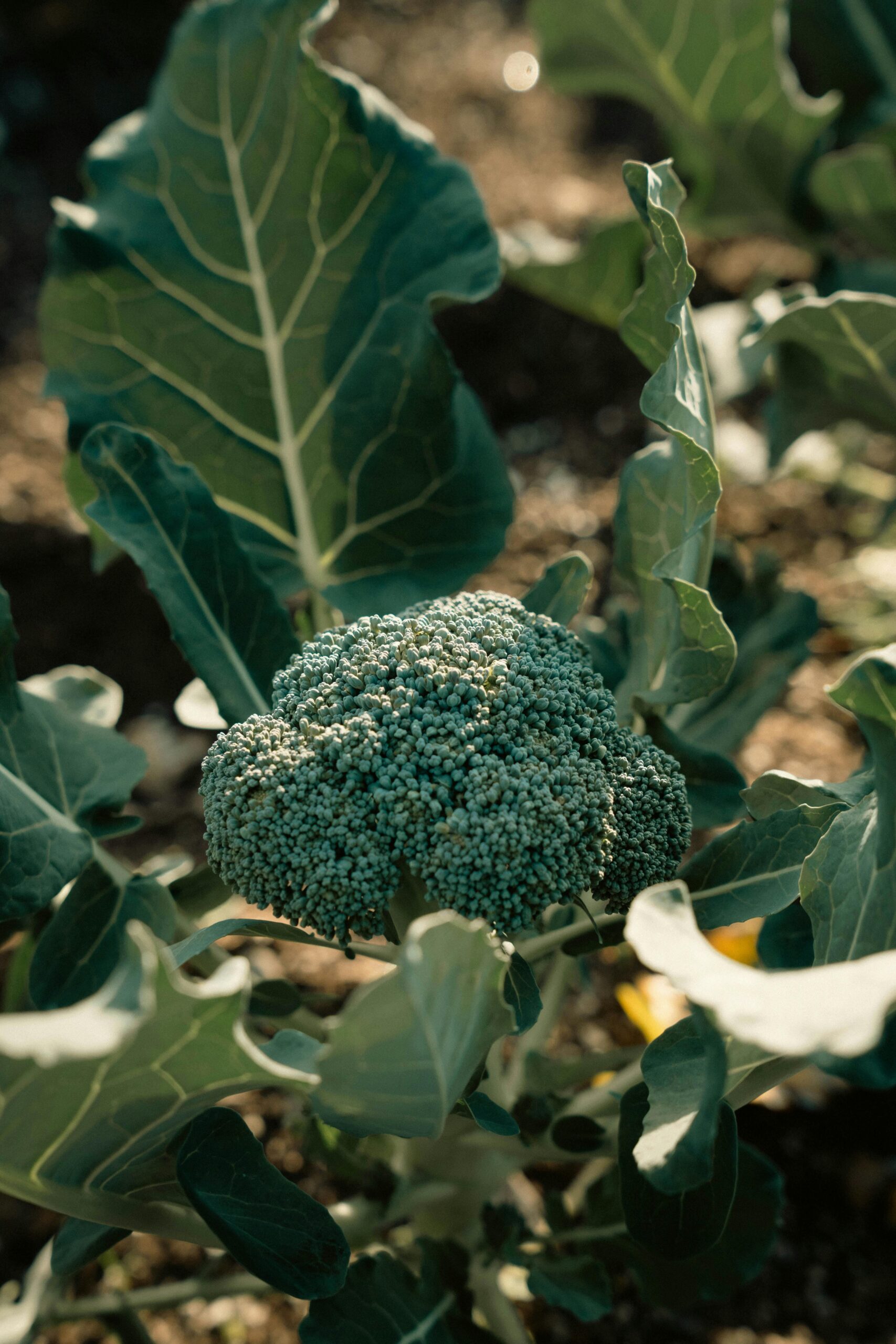
1. Botanical Profile and Origins
Broccoli belongs to the species Brassica oleracea, the same species that gave rise to cabbage, cauliflower, kale, Brussels sprouts, kohlrabi, and collard greens. These are not merely close relatives but cultivar groups of a single highly plastic species, each selectively bred for a different edible part. Broccoli, classified as B. oleracea var. italica, was domesticated for its immature flower heads and thick edible stalks.
Its documented history begins in the Mediterranean basin, with the earliest systematic cultivation generally attributed to the Etruscan and Roman civilisations. The name itself comes from the Italian broccolo, meaning “the flowering top of a cabbage”, and the Calabrese variety takes its name from Calabria, the southern Italian region where it was first grown for commercial markets. Broccoli travelled with Italian immigrants to northern Europe in the 18th century and to the Americas in the 19th century, but only became a mainstream supermarket staple in the second half of the 20th century.
Botanically, what is harvested as broccoli is the plant’s arrested inflorescence, the dense cluster of immature flower buds and their supporting stems. If left on the plant, these buds open into small yellow four-petalled flowers, the characteristic cross-shape that gives the Brassicaceae family its older name, Cruciferae.
2. Varieties: Beyond the Supermarket Head
The word “broccoli” on a grocery shelf nearly always means Calabrese, but the broader broccoli category includes several distinct cultivars and hybrids with meaningful differences in flavour, texture, and growing characteristics.
| Variety | Botanical identity | Distinctive traits |
|---|---|---|
| Calabrese | Brassica oleracea var. italica | The standard supermarket broccoli. Single dense green head; origin in Calabria, southern Italy. |
| Sprouting broccoli | B. oleracea var. italica | Multiple small purple or white florets on long stems; cold-hardy, overwinters in mild climates. |
| Broccolini (Aspabroc) | B. oleracea var. italica × alboglabra | Hybrid of broccoli and Chinese kale (gai lan); slender stems, small florets, milder and sweeter flavour. |
| Romanesco | B. oleracea var. botrytis | Usually classified within the cauliflower group (Brassica oleracea var. botrytis), though morphologically intermediate between broccoli and cauliflower. |
| Chinese broccoli (gai lan) | B. oleracea var. alboglabra | Broader leaves, thick stems, small flower clusters; more pungent flavour; staple in East Asian cuisine. |
| Broccoli sprouts | B. oleracea var. italica (3-5 day seedlings) | Young seedlings with 10-100× higher glucoraphanin than mature florets. |
Nutritionally, the five edible forms are broadly similar in macronutrient and vitamin profile, but their glucosinolate concentrations vary: sprouting broccoli and broccoli sprouts are the most concentrated sources of glucoraphanin, while Romanesco, being generally classified within the cauliflower group, contains a more cauliflower-like glucosinolate balance. Broccolini tends to contain slightly more calcium, manganese, and vitamin A than Calabrese, though the differences are modest in dietary terms.
3. Global Production and Availability
According to the most recent FAOSTAT global production data (2023), the combined “cauliflowers and broccoli” category reached approximately 26.5 million tonnes worldwide. China led with around 9.6 million tonnes, followed closely by India at roughly 9.5 million tonnes, together accounting for approximately 72% of global supply. The United States produced around 1.1 million tonnes, with Mexico, Spain, and Italy as other major producers.
FAO reports broccoli and cauliflower as a single category, so country-level broccoli-only splits are not consistently available in open datasets. In European commercial markets, Spain is the dominant winter-season exporter, with Italy contributing steady supply and the Netherlands serving as a major re-export hub. Most broccoli reaches consumers fresh, chilled, or frozen, with a smaller share processed into ready-to-cook florets, soups, and increasingly, broccoli powder and broccoli sprout extracts for the nutraceutical market.
4. Nutritional Composition
The following values reflect 100 g of broccoli: raw, cooked, and frozen, as reported by the USDA FoodData Central :
Nutrition Explorer
Source: USDA FoodData Central SR Legacy · All values per 100 g · % DV based on FDA 2,000 kcal/day reference
Three features stand out. First, vitamin C density: a single 100 g serving delivers close to the full adult daily reference. Second, vitamin K: at ~102 μg per 100 g, broccoli is among the richest dietary sources, relevant for bone health and coagulation, but also a caution for individuals on anticoagulant therapy (see Precautions). Third, broccoli contains all essential amino acids in small amounts, although it is not a significant dietary protein source.
Additional micronutrients present in meaningful quantities include choline (~18 mg/100g), lutein and zeaxanthin (carotenoids associated with eye health), and small but nutritionally relevant amounts of selenium. Broccoli also supplies glucoraphanin and other glucosinolates at concentrations typically between 400 and 1,200 μmol/100g, depending on cultivar and growing conditions, compounds not tracked by USDA tables but central to broccoli’s health profile.
5. Bioactive Compounds in Broccoli
Glucoraphanin is the dominant glucosinolate in broccoli and the precursor to sulforaphane, by far the most extensively studied cruciferous bioactive. When plant tissue is cut or chewed, the enzyme myrosinase cleaves glucoraphanin into sulforaphane, which has been shown in cellular and human studies to activate the Nrf2 antioxidant response while simultaneously inhibiting inflammatory signalling via NF-κB.
Glucobrassicin is the indole glucosinolate present in meaningful amounts in broccoli, generating indole-3-carbinol (I3C) and, via gastric acid conversion, diindolylmethane (DIM), compounds studied for their roles in oestrogen metabolism and detoxification pathways.
Flavonoids, particularly quercetin and kaempferol, contribute antioxidant capacity beyond the glucosinolate pathway. Broccoli also contains modest amounts of the carotenoids lutein and zeaxanthin, more abundant in the leaves than in the florets themselves.
6. Health Evidence: What Clinical Trials Show
The body of clinical evidence on broccoli is substantial. The studies summarised here focus specifically on broccoli or broccoli-sprout interventions, distinct from the broader cruciferous epidemiology.
6.1 Cardiometabolic Health
A systematic review and meta-analysis (Brieflands, 2022) pooled ten clinical trials of sulforaphane-yielding broccoli sprouts and reported statistically significant reductions in systolic and diastolic blood pressure compared with placebo or baseline, alongside marginal improvements in blood lipid markers. The authors noted substantial heterogeneity across studies in dose (typically 5-10 g/day of sprout powder) and duration (4-12 weeks).
In type 2 diabetes, an earlier randomised double-blind placebo-controlled trial by Bahadoran et al. (2012) found that 10 g/day of broccoli sprout powder over 4 weeks significantly decreased serum triglycerides, the oxidised-LDL/LDL ratio, and the atherogenic index of plasma.
6.2 Glucose Regulation in Prediabetes
A 2025 randomised double-blind placebo-controlled trial published in Nature Microbiology (Dwibedi et al.) tested 150 μmol/day of broccoli sprout extract over 12 weeks in 74 adults with impaired fasting glucose. The intervention did not meet the prespecified primary endpoint (a 0.3 mmol/L reduction in fasting glucose), but did produce a statistically significant overall reduction of 0.2 mmol/L (p = 0.04). Notably, the magnitude of response correlated with the abundance of a specific gut-microbiota gene operon, suggesting that individual microbiome composition modulates sulforaphane’s metabolic effect.
This gut-microbiota dependency helps explain the heterogeneous results seen across broccoli-sprout trials and suggests that responses to dietary isothiocyanates may not be uniform across populations..
6.3 Cancer Biomarkers
Broccoli-specific randomised trials have examined short-term biomarkers rather than clinical cancer endpoints. Studies cited in a comprehensive review in Critical Reviews in Food Science and Nutrition (2024) have documented increased phase-II detoxification enzyme activity, enhanced excretion of airborne pollutants in industrial-exposure settings, and measurable changes in epigenetic markers after broccoli-sprout interventions. Direct broccoli-to-cancer-incidence trials would require decades of follow-up and have not been conducted; the strongest incidence evidence comes from observational studies at the cruciferous category level.
6.4 Digestive and Microbiome Effects
Recent research highlights the gut-health benefits of broccoli’s fiber and glucosinolate content. A randomized crossover study in humans (Kaczmarek et al., 2018) found that broccoli consumption altered fecal microbial composition, notably increasing the Bacteroidetes-to-Firmicutes ratio, and shifted predicted microbial pathways involved in energy metabolism and transport/catabolism. Furthermore, separate clinical trials using sulforaphane-rich broccoli sprout preparations have shown significant reductions in Helicobacter pylori colonization and associated gastric inflammation (Yanaka et al., 2009).
7. Broccoli Sprouts: A Concentrated Precursor Source
Broccoli sprouts, the 3- to 5-day-old seedlings germinated from broccoli seed, deserve a dedicated note. Research initiated at Johns Hopkins University by Fahey and colleagues in the 1990s established that young broccoli sprouts contain between 10 and 100 times more glucoraphanin per gram than mature florets, making them the most concentrated natural dietary source of the sulforaphane precursor.
In practical terms, a small portion of broccoli sprouts (around 30-50 g) can deliver a glucoraphanin dose comparable to several hundred grams of mature broccoli. This explains why the majority of clinical trials cited above use sprout powder or sprout extract rather than mature florets: concentration makes it feasible to test meaningful doses within reasonable daily intake volumes.
Sprouts also retain their endogenous myrosinase, and, unlike cooked broccoli, are typically consumed raw, preserving the enzymatic conversion of glucoraphanin to sulforaphane. Home sprouting is straightforward with dedicated sprouting seeds and standard jar-sprouting technique, but carries the same food-safety caveats as all raw sprouts: rinse thoroughly, maintain airflow, and avoid sprouts showing any signs of mould or slime. Immunocompromised individuals, pregnant people, young children, and older adults should exercise particular caution, as raw sprouts have been implicated in bacterial outbreaks.
8. Preparation: How to Maximise Bioavailability
The bioavailability of sulforaphane depends heavily on how broccoli is prepared. Because myrosinase is a heat-sensitive enzyme, cooking methods that inactivate it reduce, though do not completely eliminate, the conversion of glucoraphanin to sulforaphane.
| Method | Effect on sulforaphane yield | Practical note |
|---|---|---|
| Raw | Maximum intact glucoraphanin; full myrosinase activity. | Use in salads, slaws, smoothies; chew thoroughly. |
| Steaming (3-4 min) | Best cooked option; retains most glucoraphanin and residual myrosinase activity. | Stop before the florets turn olive-green. |
| Stir-frying | Moderate retention; high heat but short exposure. | Quick toss; add at the end of the cook to minimise damage. |
| Boiling | Largest losses – glucosinolates leach into water and myrosinase is inactivated. | If boiling, reuse the liquid as stock. |
| Microwaving | Variable; short bursts (~1 min) preserve more than long exposures. | Use minimal water; cover loosely. |
| Roasting | Some loss, but develops rich umami notes from Maillard browning. | High heat, short duration (200-220 °C, 12-15 min). |
Two practical techniques, detailed in the Cruciferous Vegetables, apply directly to broccoli: the chop-and-rest method (chopping broccoli and letting it stand for 5-10 minutes before heat, allowing myrosinase to act) and adding a myrosinase-rich partner such as raw mustard powder, daikon radish, or watercress to a finished cooked broccoli dish to restore enzymatic activity.
9. Culinary Applications
Broccoli’s versatility across cuisines is evident. A short survey of complementary preparations:
- Mediterranean: lightly steamed then dressed with extra-virgin olive oil, lemon juice, garlic, and chilli flakes; roasted with capers and olives; tossed through pasta.
- East Asian: stir-fried with ginger, garlic, and soy; added to ramen and pho at the final minute; gai lan blanched and finished with oyster sauce (or vegan mushroom sauce).
- South Asian: charred in the tandoor; incorporated into masala curries; added to dal for texture contrast.
- Modern plant-based: blended into creamy soups with cashew; charred whole-head “steaks”; fermented as kimchi variants; shredded raw into slaws with apple and walnuts.
The stems, often discarded, are as nutritious as the florets and have a denser, sweeter texture once peeled and are excellent thinly sliced raw in salads or julienned for stir-fries..
10. Precautions and Considerations
Anticoagulant medication. Broccoli’s high vitamin K content can interfere with warfarin and similar anticoagulants. Intake does not need to be avoided, but should be kept consistent day to day; major changes should be discussed with a prescribing clinician.
Thyroid conditions. Cruciferous vegetables contain goitrogens that can theoretically interfere with iodine uptake. For people with adequate iodine intake and normal thyroid function, this is not a practical concern; individuals with hypothyroidism or iodine deficiency should not exclude broccoli, but should consult their clinician about quantities.
IBS and FODMAP sensitivity. Broccoli florets are classified as low-FODMAP in small servings (roughly 75 g), but larger portions and broccoli stems can trigger symptoms in sensitive individuals. Cooking thoroughly improves tolerance.
Raw sprout safety. As noted in Section 7, raw broccoli sprouts carry a low but real risk of bacterial contamination. Commercial sprouts should be consumed fresh, home sprouts grown with attention to hygiene, and high-risk groups should opt for cooked sprouts or broccoli sprout extract instead.
Kidney stones. Broccoli contains moderate amounts of oxalate (relatively low when compared to spinach). Individuals with a history of calcium-oxalate kidney stones should moderate intake, ideally alongside a dietitian’s guidance.
11. Conclusion
Broccoli earns its place in evidence-based nutrition for its high micronutrient density, a well-characterised bioactive compound in sulforaphane, and a growing body of clinical research reporting measurable effects on blood pressure, lipid metabolism, and glucose regulation. None of these individual findings makes broccoli a standalone functional food, but together they justify its position as a weekly, ideally daily, fixture of a plant-forward diet.
The practical takeaways are simple: rotate varieties to diversify glucosinolate intake, favour steaming over boiling, let chopped broccoli rest before heating, and consider broccoli sprouts when concentrated glucoraphanin is the goal.
As with most dietary interventions, the health impact of broccoli depends on habitual intake patterns and overall dietary context rather than isolated consumption.
Choose a preparation, enter your serving weight, and see the nutrients with % Daily Reference Value
─────────────────────────────
This article is part of Bem Bloom’s Cruciferous Vegetables Series. All information is provided for informational purposes only. It is not a substitute for professional medical or nutritional advice. Consult a qualified healthcare professional before making significant changes to your diet.
References and Further Reading
- Food and Agriculture Organization of the United Nations. FAOSTAT – Crops and livestock products: Cauliflowers and broccoli (2023).
- Dwibedi C, Axelsson AS, Abrahamsson B, et al. Effect of broccoli sprout extract and baseline gut microbiota on fasting blood glucose in prediabetes: a randomized, placebo-controlled trial. Nature Microbiology. 2025 https://www.nature.com/articles/s41564-025-01932-w
- Bahadoran Z, Tohidi M, Nazeri P, Mehran M, Azizi F, Mirmiran P. Potential efficacy of broccoli sprouts as a supplement in patients with type 2 diabetes: a randomized double-blind drug-controlled clinical trial. International Journal of Food Sciences and Nutrition. 2012 https://pubmed.ncbi.nlm.nih.gov/22325157/
- Houshialsadat Z, Mirmiran P, Zare-Javid A, Bahadoran Z, Houghton C. Beneficial effects of sulforaphane-yielding broccoli sprout on cardiometabolic health: a systematic review and meta-analysis. Jundishapur Journal of Natural Pharmaceutical Products. 2022 https://brieflands.com/journals/jjnpp/articles/129402
- Houghton CA. Sulforaphane: Its “Coming of Age” as a Clinically Relevant Nutraceutical in the Prevention and Treatment of Chronic Disease. Oxidative Medicine and Cellular Longevity. 2019;2019:2716870. https://pmc.ncbi.nlm.nih.gov/articles/PMC6815645/
- Zhang Y, Zhang W, Zhao Y, et al. Bioactive sulforaphane from cruciferous vegetables: advances in biosynthesis, metabolism, bioavailability, delivery, health benefits, and applications. Critical Reviews in Food Science and Nutrition. 2025 (Epub 2024). https://pubmed.ncbi.nlm.nih.gov/38841734/
- Yagishita Y, Fahey JW, Dinkova-Kostova AT, Kensler TW. Broccoli or sulforaphane: is it the source or dose that matters? Molecules. 2019 https://pmc.ncbi.nlm.nih.gov/articles/PMC6885086/
- Connolly EL, Sim M, Travica N, et al. Glucosinolates from cruciferous vegetables and their potential role in chronic disease: investigating the preclinical and clinical evidence. Frontiers in Pharmacology. 2021. https://www.frontiersin.org/journals/pharmacology/articles/10.3389/fphar.2021.767975/full
- U.S. Food and Drug Administration. Selecting and serving produce safely. Updated June 3, 2024. Accessed April 22, 2026. https://www.fda.gov/food/buy-store-serve-safe-food/selecting-and-serving-produce-safely
- National Institutes of Health Office of Dietary Supplements. Choline: Fact sheet for health professionals. Updated June 2, 2022. Accessed April 22, 2026. https://ods.od.nih.gov/factsheets/Choline-HealthProfessional/
- Kaczmarek JL, Liu X, Charron CS, et al. Broccoli consumption affects the human gastrointestinal microbiota. The Journal of Nutritional Biochemistry. 2019. https://pmc.ncbi.nlm.nih.gov/articles/PMC8025206/
- Yanaka A, Fahey JW, Fukumoto A, et al. Dietary broccoli sprouts decrease gastritis in Helicobacter pylori–infected mice and humans. Cancer Prevention Research. 2009. https://pubmed.ncbi.nlm.nih.gov/19349290/
- Fahey JW, Zhang Y, Talalay P. Broccoli sprouts: an exceptionally rich source of inducers of enzymes that protect against chemical carcinogens. Proc Natl Acad Sci U S A. 1997. https://pubmed.ncbi.nlm.nih.gov/9294217/
- USDA National Institute of Food and Agriculture (NIFA). Sprouts: Food Safety for Sprouting Seeds at Home. 2016. (Revised 508-compliant version). https://www.nifa.usda.gov/sites/default/files/resource/Sprouts%20-%20corrected%20508.pdf