
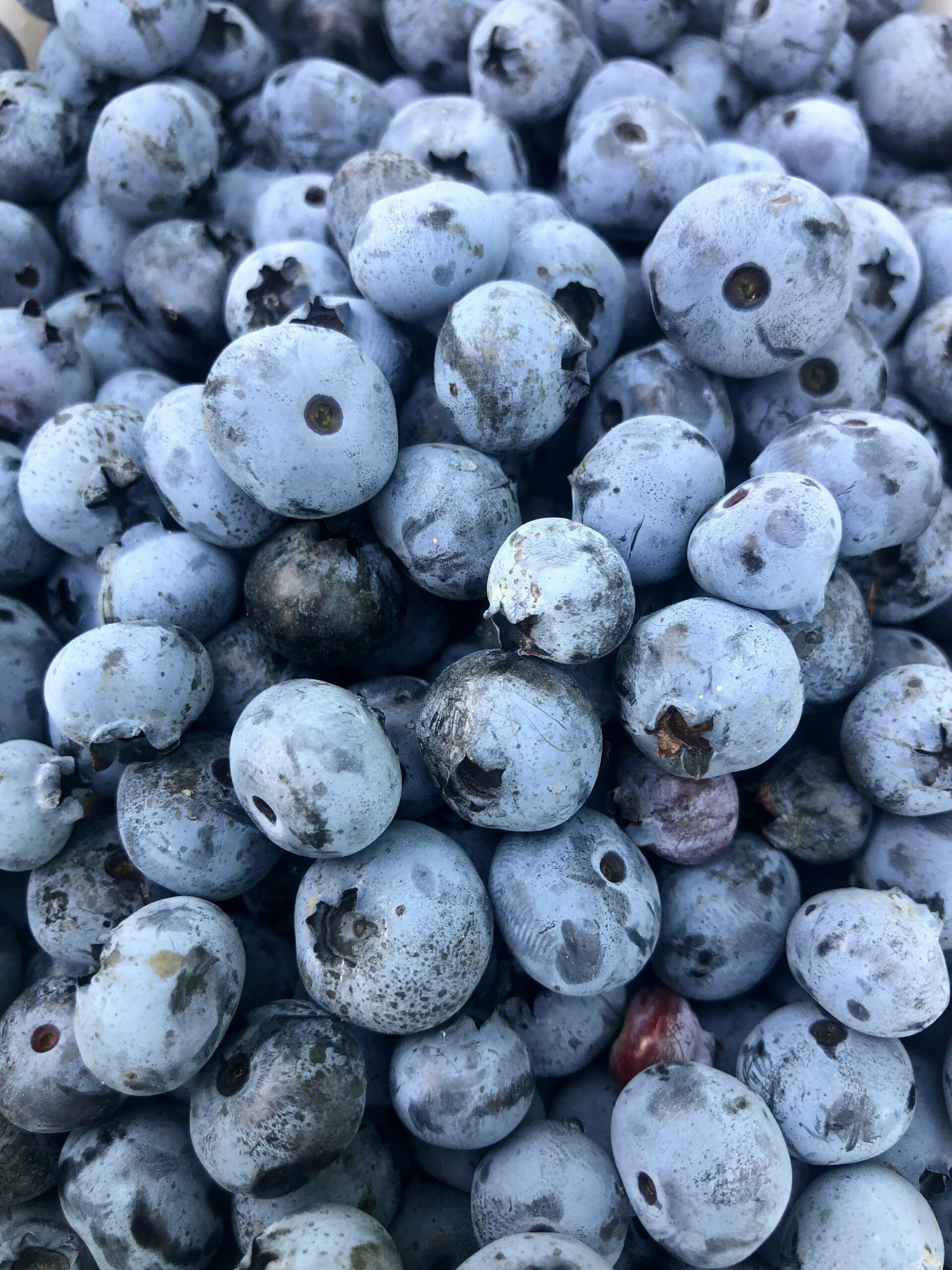
1. Botanical Profile
Blueberries belong to the family Ericaceae (the heath family) and the genus Vaccinium, a large and complex group of approximately 150 species that also includes cranberries, bilberries, lingonberries, and huckleberries. Within the genus, the blueberry species consumed commercially fall under the section Cyanococcus (the cluster-fruited blueberries)¹. All are deciduous shrubs that produce small, round fruits ranging from 5 to 12mm in diameter, developing their characteristic blue-to-purple coloration during ripening as anthocyanin pigments accumulate in the skin².
Several distinct species are cultivated or harvested commercially, each with its own growing characteristics, geographic range, and phytochemical profile. But long before any of them were cultivated, wild blueberries played an important role in the foodways of North America’s Indigenous peoples.
2. Historical Context
Native North Americans consumed wild blueberries for thousands of years before European contact. The berries were eaten fresh in season and dried for winter storage, incorporated into foods such as pemmican (dried berries mixed with meat and fat for preservation) and sautauthig, (pudding of dried blueberries, cracked corn, and water). Beyond food, various parts of the Vaccinium plant: roots, stems, leaves, and fruit, were used for medicinal purposes, including teas prepared to treat coughs and colds. The earliest written European record of this relationship dates to 1615, when Samuel de Champlain observed Algonquin women drying blueberries along Lake Huron³.
Critically, Indigenous peoples did not simply forage,they actively managed wild blueberry landscapes through controlled burns, clearing old shrubs and stimulating new growth. This land management practice is still employed in lowbush blueberry production in Maine and the Canadian Maritime provinces today. Tribes including the Micmac and Passamaquoddy continue to maintain blueberry barrens in collaboration with government and private agencies. Indigenous knowledge of the plant’s edible uses, growth habits, and habitat directly informed European settlers and, ultimately, the first formal domestication efforts⁴.
3. Major Species
Highbush Blueberry (Vaccinium corymbosum L.)
The northern highbush blueberry is the most widely cultivated species worldwide. It is an upright, multi-stemmed deciduous shrub that typically grows 1.8 to 3.7 metres tall⁵. Native to eastern North America, it is naturally found in moist woods, bogs, swamps, and lakeshores, habitats that reflect its preference for acidic soils with a pH between 4.5 and 5.5. The highbush blueberry is shade-intolerant and thrives in open, sunlit environments⁶.
Building on centuries of Indigenous knowledge, cultivated highbush blueberry production began in the early 1900s through the collaboration of Elizabeth White, a cranberry farmer in New Jersey, and USDA botanist Frederick Coville, who selected and domesticated wild highbush plants⁷. Today, highbush blueberries are cultivated across multiple countries and continents. Hybrids between V. corymbosum and the southern species V. darrowii have produced southern highbush cultivars adapted to warmer climates with lower chilling-hour requirements.
Highbush blueberries produce the largest fruits among the blueberry species (6-12 mm diameter) and are the type most commonly found in supermarkets worldwide. The berries ripen over a two-month period after bloom, with the season typically running from June to September in the Northern Hemisphere. The predominant anthocyanins in highbush fruit are malvidin-based glycosides, with delphinidin and petunidin as secondary types, according to data cited in Advances in Nutrition.
Lowbush or Wild Blueberry (Vaccinium angustifolium Aiton)
The lowbush blueberry is a low-growing shrub, rarely exceeding 40 cm in height, that spreads through underground rhizomes to form dense, ground-level colonies known as “blueberry barrens.” Production is largely confined to the northeastern United States, particularly Maine, and the Maritime provinces and Quebec in Canada, according to the University of Maine Cooperative Extension. Unlike highbush varieties, lowbush blueberries are not planted in rows; they grow semi-wild and are managed through practices such as controlled burning and mowing on two-year cycles, a method resembling pre-Columbian cultivation by Indigenous peoples.
The fruit is smaller than highbush berries (typically 5-8 mm) but has a more intense flavour. From a phytochemical perspective, lowbush blueberries are consistently higher in anthocyanins, total phenolics, and antioxidant capacity compared with highbush blueberries, as demonstrated by Kalt et al. (2001) in an analysis of 80 highbush and 135 lowbush genotypes. The University of Maine notes that wild blueberries provide 200-400 mg of polyphenols per half cup (150 berries). Notably, while lowbush blueberries have greater anthocyanin content than highbush, raspberry, and strawberry, they have lower vitamin C levels than those three berries.
Rabbiteye Blueberry (Vaccinium virgatum Aiton)
Native to the southeastern United States, the rabbiteye blueberry, named for the pink colour of its fruit prior to ripening, which resembles the eye of an albino rabbit, is the most adaptable and heat-tolerant of the three main species, according to the Clemson University Home & Garden Information Center. It grows as a vigorous shrub reaching 2 to 3 metres tall (up to 4 metres in ideal conditions), is more tolerant of drought and higher soil pH (up to 5.8) than highbush varieties, and is subject to fewer pests and diseases.
Rabbiteye cultivars require 350-700 chilling hours (hours below 7 °C) depending on the variety, and are commercially produced mainly in the southeastern United States. A distinctive characteristic is that rabbiteye blueberries have longer corolla flowers than highbush varieties, making honeybees less efficient pollinators; they depend more on buzz pollination by native bees such as Habropoda laboriosa (the southeastern blueberry bee). Cross-pollination between at least two rabbiteye varieties is required for adequate fruit set. Mature rabbiteye plants are exceptionally long-lived and productive, often surviving for several decades and yielding 5 to 11 kg of fruit per bush annually.
European Bilberry (Vaccinium myrtillus L.)
The European bilberry, while not a true blueberry, is a closely related species within the genus Vaccinium (section Myrtillus). It grows across Northern and Central Europe, the British Isles, and parts of northern Asia. A key botanical difference is that bilberries are smaller, darker, and have anthocyanins distributed throughout the entire flesh of the fruit, not just in the skin, as with North American blueberry species. This means bilberry juice and flesh are deeply pigmented red-purple, in contrast to the pale-green interior of a highbush blueberry.
From a phytochemical standpoint, bilberries tend to have a different anthocyanin profile from blueberries: they are richer in delphinidin-based anthocyanins, whereas cultivated highbush blueberries are dominated by malvidin-based compounds. Research cited in a 2025 review in eFood notes that bilberries may also contain higher levels of pelargonidin than either highbush or lowbush blueberries.
4. Anthocyanin Variation Between Species
The anthocyanin composition of blueberry fruits is not uniform across species, and this has implications for health research. Anthocyanin flavonoids account for up to 60 % of total polyphenolics in ripe blueberries². Among 215 highbush and lowbush genotypes analysed, 90 % spanned a 1.6-fold range in anthocyanin concentration. This variation means that health outcomes in clinical studies may differ depending on which species or cultivar is used, a factor that readers should bear in mind when interpreting the evidence presented in this article.
5. Global Production
From a modest North American crop, blueberry cultivation has expanded to six continents. According to the International Blueberry Organization (IBO), global production reached 1.78 million tonnes in 2023 and exceeded 2 million tonnes for the first time in 2024. Global cultivation area stood at 267,000 hectares in 2023, up from 201,000 hectares in 2019. China, the United States, and Peru contributed a combined 88 % of 2023 output. Latin America now holds the largest share of global acreage at 42 %, reflecting major investments in Peru, Mexico, and Chile.
6. Nutritional Composition
The following chart presents the nutritional composition per 100g, of raw wild blueberries, raw cultivated blueberries and frozen unsweented:
Source: USDA FoodData Central SR Legacy · All values per 100 g · Cultivated raw NDB 09050 · Wild raw NDB 09051 · Frozen unsweetened NDB 09054 · % DV based on FDA 2,000 kcal/day reference · No official DV for sugars · Frozen unsweetened retains most nutrients and is close to raw
Beyond macronutrients, blueberries are notable for their phytochemical content. They contain up to 304 mg of polyphenols per 100 g of fresh fruit, with anthocyanins as the predominant class. The main anthocyanin subgroup in blueberries is malvidin, distinguishing them from other berries where cyanidins (e.g. in elderberry) or delphinidins (e.g. in bilberry) predominate. Anthocyanins account for approximately 84 % of the total antioxidant capacity of blueberry fruits².
Blueberries are also low in oxalates (around 3.2 mg per 100 g), making them a suitable fruit choice for individuals managing oxalate intake, unlike some other berries. They have a glycaemic index of 53, which is considered low-to-medium, and they are not expected to cause significant blood sugar spikes in most individuals.
7. Health Benefits
7.1 Cognitive Function and Brain Health
The association between blueberries and brain health is arguably the most studied aspect of this fruit. Blueberries are the only fruit specifically singled out in the MIND diet (Mediterranean-DASH Intervention for Neurodegenerative Delay), a dietary pattern developed at Rush University Medical Center that has been associated with reduced risk of Alzheimer’s disease in observational studies.
Several randomised controlled trials have examined the effects of blueberry consumption on cognitive performance. A notable 2022 double-blind, placebo-controlled trial published in Nutritional Neuroscience, the longest and largest cognitive intervention study on wild blueberries to date, found that six months of daily wild blueberry powder consumption improved processing speed in older adults (aged 65-80) with mild cognitive decline. Processing speed was restored to the level of a reference group without cognitive issues.
A separate 2022 randomised control trial published in Nutrients found that 12 weeks of consuming half a cup of blueberries daily improved executive function in adults aged 50-65 with subjective cognitive decline. A systematic review in Scientific Reports identified 11 clinical trials using various forms of blueberry supplementation in older adults, with the majority reporting improvements in short-term and long-term memory as well as spatial cognition.
The proposed mechanisms involve anthocyanins crossing the blood-brain barrier and accumulating in brain regions critical for memory, including the hippocampus. According to a review in PMC, blueberry-derived compounds appear to enhance neuronal signalling, reduce neuroinflammation, and improve cerebral blood flow.
7.2 Cardiovascular Health
Epidemiological studies associate regular, moderate intake of blueberries and anthocyanins with reduced risk of cardiovascular disease and mortality. Higher anthocyanin intake is linked to reduced risk of myocardial infarction and coronary heart disease².
On the clinical side, a meta-analysis by Carvalho et al. encompassing 18 blueberry-intervention randomised controlled trials found that blueberry consumption significantly decreased total cholesterol and LDL cholesterol, as well as diastolic blood pressure. A separate systematic review of 45 intervention studies found a positive impact of blueberry consumption on vascular function.
The cardiovascular mechanisms involve multiple pathways: blueberry anthocyanins enhance nitric oxide bioavailability (improving vascular relaxation), reduce production of pro-inflammatory cytokines, and modulate lipid metabolism. These effects have been documented in both human trials and controlled animal studies, as reviewed in a 2025 paper in eFood.
7.3 Blood Sugar Regulation
Despite containing natural sugars, blueberries have a relatively low glycaemic index and have demonstrated beneficial effects on glucose metabolism. Epidemiological evidence from prospective cohort studies² links higher blueberry and anthocyanin intake to reduced risk of type 2 diabetes. A meta-analysis published in the European Journal of Clinical Nutrition corroborated this association.
In clinical settings, research published in PMC (Stote et al., 2020) found that blueberry supplementation may improve insulin sensitivity and reduce fasting glucose in certain populations. One study noted that incorporating whole blueberries into the diet improved glucose regulation in inactive young adults. The proposed mechanism involves anthocyanins modulating insulin signalling pathways and reducing oxidative stress in pancreatic beta cells.
7.4 Gut Microbiome
An emerging area of research concerns the interaction between blueberry polyphenols and the gut microbiota. According to a systematic review of 16 pre clinical studies, blueberry consumption improved gut health by promoting beneficial bacterial populations. Anthocyanins and proanthocyanidins undergo extensive metabolism by intestinal microbiota, producing metabolites that may mediate many of the systemic health effects attributed to blueberry consumption. However, human clinical evidence in this area remains limited, and more intervention trials are needed.
8. Forms of Consumption: Fresh, Frozen, Dried, and Powdered
Blueberries are widely available in multiple forms, each with distinct characteristics:
| Form | Key Characteristics | Considerations |
| Fresh | Full nutrient profile; natural texture and flavour | Seasonal availability varies by region; perishable |
| Frozen | Nutrient content comparable to fresh; convenient year-round availability | Freezing preserves most anthocyanins; may lose some texture upon thawing |
| Dried | Concentrated nutrients per gram; portable | Often contains added sugar; check labels. Higher calorie density (80 g carbs per 100 g) |
| Freeze-dried powder | Used in clinical studies; standardised anthocyanin content | Mixes into smoothies, yoghurt, oatmeal. No added sugar in pure forms |
Studies² indicate that freezing blueberries does not significantly reduce their anthocyanin content and may even help preserve it by slowing enzymatic degradation. For consumers seeking to maximise phytochemical intake, both fresh and frozen blueberries are effective options.
There is currently no officially recommended daily intake specific to blueberries. The dose most commonly used in clinical trials is approximately one cup (~150 g) of fresh blueberries per day, or the equivalent of 22 g of freeze-dried powder. Anthocyanin content varies considerably by species and cultivar.
9. Culinary Applications
Blueberries are among the most versatile berries in the kitchen. Their relatively mild, sweet flavour and small size make them suitable for a wide range of culinary uses. They can be eaten raw as a snack, added to breakfast cereals, porridge, or yoghurt, blended into smoothies, baked into muffins, pancakes, and scones, or used in sauces and compotes for both sweet and savoury dishes.
From a nutritional perspective, consuming blueberries raw or minimally processed (e.g. in smoothies or with yoghurt) preserves the highest levels of heat-sensitive compounds such as vitamin C. Baking at moderate temperatures still retains a significant portion of anthocyanins, though some degradation occurs. For maximum phytochemical benefit, combining blueberries with a source of healthy fat (such as nuts or yoghurt) may enhance the absorption of fat-soluble antioxidant compounds.
10. Precautions and Contraindications
Blueberries are generally considered safe for consumption by the general population, including children, pregnant women, and older adults. However, a few considerations apply:
Vitamin K and anticoagulants. Blueberries contain vitamin K (19.3 µg per 100 g), which plays a role in blood clotting. Individuals taking warfarin or other vitamin K-dependent anticoagulants should maintain consistent intake rather than abruptly increasing consumption, and consult their healthcare provider.
Allergies. Although rare, blueberry allergies have been reported. Individuals with known sensitivities to other Vaccinium species or members of the Ericaceae family should exercise caution.
Added sugar in processed products. Dried blueberries, blueberry juices, and blueberry-flavoured products frequently contain significant amounts of added sugar. Checking nutrition labels is essential, particularly for individuals managing blood glucose levels or caloric intake.
Salicylate content. Blueberries contain natural salicylates. Individuals with salicylate sensitivity may experience symptoms and should monitor their intake.
11. Conclusion
The blueberry’s combination of anthocyanins, fibre, and essential micronutrients, delivered in a low-calorie, low-glycaemic-index package, makes it a valuable addition to a health-conscious diet. The clinical evidence, particularly for cognitive function and cardiovascular health, is growing and is supported by multiple randomised controlled trials.
Blueberries are adaptable to multiple forms of consumption (fresh, frozen, dried, powdered), and are integrated into established dietary patterns such as the MIND and Mediterranean diets. Whether consumed as a daily snack, a breakfast addition, or a smoothie ingredient, regular blueberry intake offers a practical and evidence-informed dietary choice.
Choose a variety or form, enter your serving weight, and see the exact nutrients with % Daily Reference Value
─────────────────────────────
This article is part of Bem Bloom’s Berries and Superfruits series. All information is provided for informational purposes only. It is not a substitute for professional medical or nutritional advice. Consult a qualified healthcare professional before making significant changes to your diet.
References and Further Reading
- ScienceDirect – Vaccinium angustifolium: taxonomy and botanical overview: https://www.sciencedirect.com/topics/agricultural-and-biological-sciences/vaccinium-angustifolium
- Kalt, W. et al. (2020). Recent Research on the Health Benefits of Blueberries and Their Anthocyanins. Advances in Nutrition, 11(2), 224-236: https://pmc.ncbi.nlm.nih.gov/articles/PMC7442370/
- University of Illinois Extension – The history of blueberries: From Native American staple to domesticated superfood (2019): https://extension.illinois.edu/blogs/garden-scoop/2019-01-19-history-blueberries-native-american-staple-domesticated-superfood
- Smithsonian Libraries – Native Fruit: The Wild Blueberry (2018): https://blog.library.si.edu/blog/2018/11/13/native-fruit-the-wild-blueberry/
- Missouri Botanical Garden – Vaccinium corymbosum, Plant Finder: https://www.missouribotanicalgarden.org/PlantFinder/PlantFinderDetails.aspx?taxonid=279992
- US Forest Service – Vaccinium corymbosum, Highbush Blueberry (FEIS species review): https://research.fs.usda.gov/feis/species-reviews/vaccor
- USDA Foreign Agricultural Service – Blueberries Around the Globe: Past, Present, and Future: https://www.fas.usda.gov/data/blueberries-around-globe-past-present-and-future
- University of Maine Cooperative Extension – Wild Blueberry Concentrations: Antioxidants, Vitamins and Minerals: https://extension.umaine.edu/blueberries/resources/quality-food-safety/wild-blueberry-concentrations-antioxidants-vitamins-and-minerals/
- Kalt, W. et al. (2001). Interspecific Variation in Anthocyanins, Phenolics, and Antioxidant Capacity among Genotypes of Highbush and Lowbush Blueberries. Journal of Agricultural and Food Chemistry, 49(10), 4761-4767: https://pubmed.ncbi.nlm.nih.gov/11600018/
- Clemson University Home & Garden Information Center – Blueberry: https://hgic.clemson.edu/factsheet/blueberry/
- Arshad, R. et al. (2025). Recent Perspectives on the Role of Anthocyanins in Blueberries Against Cardiovascular Diseases. eFood: https://iadns.onlinelibrary.wiley.com/doi/full/10.1002/efd2.70072
- International Blueberry Organization (IBO) – Global Fresh Blueberry Outlook 2025-2030: https://www.internationalblueberry.org/2025/04/14/global-fresh-blueberry-outlook-2025-2030/
- USDA FoodData Central – Blueberries, raw (FDC ID 171711): https://fdc.nal.usda.gov/
- Aprifel / ANSES – Blueberry: Nutritional Composition (Ciqual 2020): https://www.aprifel.com/en/nutritional-sheet/blueberry/
- AARP – Eating Blueberries Could Help Improve Cognitive Function: https://www.aarp.org/health/healthy-living/blueberries-and-brain-health/
- Cheatham, C. L. et al. (2022). Six-month intervention with wild blueberries improved speed of processing in mild cognitive decline. Nutritional Neuroscience: https://www.tandfonline.com/doi/full/10.1080/1028415X.2022.2117475
- Krikorian, R. et al. (2022). Blueberry Supplementation in Midlife for Dementia Risk Reduction. Nutrients, 14(8), 1619: https://pmc.ncbi.nlm.nih.gov/articles/PMC9031005/
- Hossain, S. et al. (2022). Effect of berry-based supplements and foods on cognitive function: a systematic review. Scientific Reports, 12, 3239: https://www.nature.com/articles/s41598-022-07302-4
- Krikorian, R. et al. (2010). Blueberry Supplementation Improves Memory in Older Adults. Journal of Agricultural and Food Chemistry, 58(7), 3996-4000: https://pmc.ncbi.nlm.nih.gov/articles/PMC2850944/
- The state of the science on the health benefits of blueberries: a perspective. Frontiers in Nutrition (2024): https://pureadmin.qub.ac.uk/ws/portalfiles/portal/596054408/fnut-11-1415737.pdf
- Guo, X. et al. (2016). Associations of dietary intakes of anthocyanins and berry fruits with risk of type 2 diabetes mellitus: a systematic review and meta-analysis. European Journal of Clinical Nutrition, 70(12), 1360-1367: https://www.nature.com/articles/ejcn2016142
- Li, S. et al. (2024). Blueberry Anthocyanins: Functions, Stability, Bioavailability, and Applications. Molecules, 29(18): https://pmc.ncbi.nlm.nih.gov/articles/PMC11395062/