
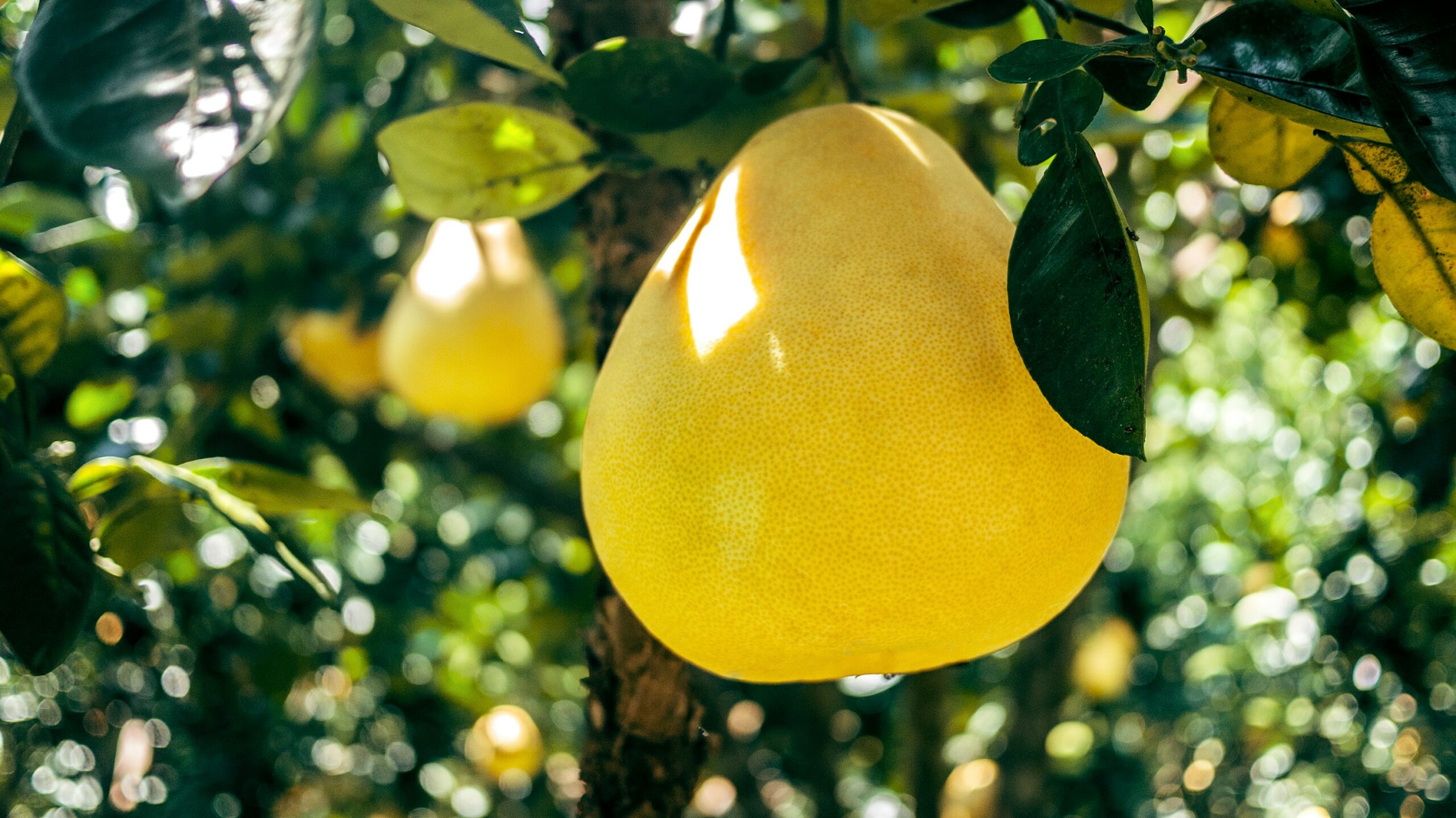
1. An Ancestral Citrus, Not a Hybrid
Most of the citrus on a European or American supermarket shelf: the navel orange, the Persian lime, the Eureka lemon, the ruby grapefruit, are interspecific hybrids of comparatively recent agricultural history. Pomelo is not. Citrus maxima is one of the three ancestral, non-hybrid citrus species identified by whole-genome sequencing, alongside citron (C. medica) and mandarin (C. reticulata). These three lineages diversified during the late Miocene epoch, around six to eight million years ago, in a rapid Southeast Asian radiation linked to weakening monsoons.
The agricultural significance of this ancestry is substantial. The grapefruit (Citrus × paradisi) is a hybrid of pomelo and sweet orange, with roughly sixty-three per cent of its genome inherited from C. maxima. The bitter or sour orange (C. aurantium) is a direct cross between pomelo and mandarin. The sweet orange (C. sinensis) emerged through a more complex history of pomelo-mandarin admixture. Lemons descend from sour orange and citron, which means cultivated lemons also carry pomelo ancestry. Even the modern mandarins on European shelves contain repeated pomelo introgressions; their size and palatability appear to correlate with how much C. maxima genome they carry.
In short: Pomelo is one of the foundational building blocks of the citrus family tree. Pomelo occupies a central position in the evolutionary history of cultivated citrus.
2. Botanical Profile and Cultivars
Citrus maxima, also recorded historically as Citrus grandis, and sometimes called pummelo, shaddock or Chinese grapefruit, belongs to the Rutaceae family. The tree reaches 5 to 15 metres in height, with a crooked trunk, low irregular branches and large, ovate leaves. The fruit is the largest in the citrus family: typically 15 to 30 centimetres across and 1 to 2 kilograms in weight, with a thick green-to-yellow rind and a juicy, mildly sweet interior whose flesh ranges from pale yellow through pink to deep red depending on cultivar.
Pomelo is notable for its predominantly sexual reproduction and strong self-incompatibility system, in contrast to many commercially important citrus cultivars that exhibit varying degrees of nucellar embryony (apomixis). A gametophytic self-incompatibility system prevents self-pollination, and intervarietal crosses have been the principal driver of varietal diversity. The result is an unusually wide cultivar landscape. In China, by far the world’s largest producer, accounting for more than half of global output of the FAO’s combined pomelo-and-grapefruit category, Guanximiyu, Shatianyu, Liangpingyu and Yuhuanyu dominate commercial production. Southeast Asian cuisines centre on cultivars such as the Thai Kao Pan and Thong Dee, the Siamese Sweet, the Vietnamese Duong La Cam, the Malaysian Tambun and the Japanese Ban-peiyu, Tosa-buntan and Hirado-buntan. In Israel, the Eilat (also marketed as Eingedi) is the principal commercial variety. The Chandler (a pink-fleshed cultivar developed at the University of California, Riverside) and the Honey pomelo, with a sweeter and less bitter profile, are the two cultivars most likely to appear in European and North American specialty stores.
Recent FAOSTAT data place combined global pomelo-and-grapefruit production at roughly 9.7 million tonnes annually. China alone produced an estimated 5.25 million tonnes in the 2024/25 marketing year according to the USDA Foreign Agricultural Service, with Vietnam, Mexico, South Africa, Sudan, the United States and Thailand making up the bulk of the remainder.
3. Nutritional Composition
Raw flesh · Per 100 g
Source: USDA FoodData Central SR Legacy · Pomelo, raw · Per 100 g · % DV based on FDA 2,000 kcal/day reference
Two features stand out. The first is the vitamin C density, a single 190 g cup of segments delivers more than the adult daily reference value of ascorbic acid, placing pomelo among the most reliable whole-food sources in the citrus family. The second is the low energy density: at 38 kcal per 100 g and 89 % water, pomelo offers substantial satiety per calorie, which has driven its use in weight-management eating patterns across East Asia.
4. Bioactive Compounds
The pillar article on Citrus Fruits covers the shared phytochemical architecture of the family: flavanones, polymethoxyflavones, limonoids, carotenoids, pectin. Pomelo’s distinctive bioactive signature sits within that framework but with characteristic emphases.
Naringin and naringenin
Naringin is the predominant flavonoid in pomelo and is the compound responsible for its characteristic mild bitterness. Concentration varies dramatically between fruit parts. According to a quantitative analysis of Vietnamese Duong La Cam pomelo, naringin reaches 43.28 mg per gram in the white pith, 3.91 mg per gram in the green outer peel, 0.22 mg per gram in the flesh and just 0.028 mg per gram in the seeds. The pith and peel are therefore considerably richer in this flavonoid than the edible flesh, a fact long recognised by traditional Chinese medicine, which uses dried pomelo peel (hua ju hong) as a digestive remedy.
Once consumed, naringin is hydrolysed by gut microbiota to its aglycone naringenin, which is the form that reaches systemic circulation in meaningful amounts. Both compounds display antioxidant and anti-inflammatory activity in vitro, inhibiting markers such as IL-1β and TNF-α in cell-based assays, and have been investigated for lipid-modulating effects in animal models.
Other flavonoids and limonoids
A comparative UHPLC-MS analysis of Chinese pomelo and grapefruit cultivars identified fourteen flavonoids across the species, with naringin and cigranoside C as the major compounds in Guanximiyu (white and red types) and Liangpingyu. Shatianyu had melitidin as its predominant flavonoid; Yuhuanyu had rhoifolin. Hesperidin, narirutin, neohesperidin and the novel cigranosides C, D and E appear at lower concentrations. Pomelo peel also contains limonoids reaching about 4.69 mg per gram, contributing to its antioxidant capacity in DPPH and ABTS assays.
Carotenoids
Pink and red-fleshed pomelo cultivars accumulate carotenoids (principally β-carotene and lycopene) which give the flesh its colour. The carotenoid profile of red pomelo overlaps significantly with that of pink grapefruit, although the absolute concentrations are usually lower in pomelo flesh. Pale-yellow and white cultivars contain markedly less.
Furanocoumarins
Pomelo synthesises furanocoumarins (chiefly bergamottin and 6′,7′-dihydroxybergamottin) at concentrations comparable to those found in grapefruit. A 2015 comparative study found that pomelos, citrons and papedas accumulate substantially more of these compounds than mandarins do. This is the chemical basis for the drug interaction risk discussed in section 8.
5. What the Clinical Evidence Shows – and Does Not
Pomelo is widely studied at the bench. Pomelo is comparatively understudied at the bedside. Drawing a clear distinction between the two matters when summarising the literature.
In vitro and animal evidence is consistent with the antioxidant and metabolic effects that would be expected of a flavanone-rich citrus fruit. Pomelo peel ethanol extracts reduce body weight, fasting glucose and serum cholesterol in high-fat-diet mouse models through PPARα and GLUT4 pathway activation. Isolated naringin at 400 mg/day has shown lipid-lowering effects in human pilot studies of hypercholesterolaemic subjects, although other trials with comparable doses of naringin or hesperidin have failed to replicate the effect in moderate hypercholesterolaemia.
Whole-fruit human evidence is sparse. A narrative review of pomelo’s nutritional and health potential published in Current Research in Nutrition and Food Science (2024) catalogues plausible mechanisms across cardiovascular, metabolic, hepatoprotective and antimicrobial domains, but the underlying studies are predominantly preclinical. Direct randomised controlled trials of whole pomelo consumption (comparable to those that exist for orange juice, grapefruit or hesperidin supplements) have not, to date, been published in significant number.
This does not mean pomelo lacks health value. The vitamin C content alone is sufficient to support immune function and collagen synthesis at modest serving sizes, and the fibre and water content support satiety and digestive regularity. It means that pomelo-specific claims about chronic-disease prevention, heart disease, cancer, diabetes, should be read as biologically plausible and mechanistically supported, but not as clinically demonstrated in humans through whole-fruit interventions. Where the pillar article documents robust trial evidence for citrus flavanones generally, pomelo participates in that evidence base by family membership rather than by its own dedicated trials.
6. Recommended Use and Serving Sizes
There is no formal dietary reference intake for pomelo. The World Health Organization’s guidance on fruit and vegetable consumption recommends at least 400 g per day of fruit and vegetables in total, of which any citrus fruit may contribute.
A practical serving is one cup of segments (approximately 190 g), which delivers around 72 kcal, well over the adult reference value for vitamin C, and roughly one-fifth of the EU reference value for potassium. Half a medium pomelo (about 300 g of edible flesh) is a typical eating portion in Southeast Asian households, though the fruit’s size means it is often shared. Whole pomelos retail in European specialty markets at roughly €3-6 / $3.40-6.80 per fruit, depending on origin and cultivar; Honey and Chandler pomelos from China and the United States typically sit at the upper end of that range, while in-season Vietnamese and Thai cultivars are available more affordably.
Pomelo is sold year-round in major Asian-produce markets, with peak European availability between November and March when Chinese, Vietnamese and Israeli cultivars converge. Stored at room temperature, the fruit keeps for one to two weeks; refrigerated and uncut, two to three weeks.
7. Culinary Applications
Pomelo is eaten in ways that reflect its scale and its texture. The flesh separates into firm, almost dry-feeling vesicles that hold their shape rather than collapsing into juice when handled, a property that distinguishes pomelo from grapefruit in salads and savoury preparations.
Southeast Asia
In Thailand, yam som-o pairs pomelo segments with toasted coconut, shrimp or chicken, chillies, lime juice, fish sauce and palm sugar. In Vietnam, gỏi bưởi combines the fruit with herbs, fried shallots, peanuts and dried shrimp. Across the region, pomelo is also a staple of the Mid-Autumn Festival, eaten fresh as a symbolic offering.
East Asia
In Chinese culinary tradition, dried pomelo peel (hua ju hong) is used in herbal soups and teas. The fresh fruit is consumed during Lunar New Year as a symbol of abundance and family unity, the Cantonese word for pomelo is homophonous with the word for blessing. In Japan, the Tosa-buntan and Hirado-buntan cultivars are eaten fresh and used to flavour preserves, marmalades and the spirit buntanshu.
Western kitchens
In European and North American cooking, pomelo most often appears as a milder alternative to grapefruit in citrus salads with: avocado, fennel, watercress, burrata or cured salmon, and in cocktails and infused vinegars. The white pith, normally bitter in grapefruit, is thicker and less aggressive in pomelo, which means some chefs use it candied or in marmalades. Pomelo zest, like that of any citrus, is best taken from organically grown fruit, since the outer peel concentrates any agrochemical residues applied during cultivation.
8. Precautions
- CYP3A4 drug interactions. Pomelo synthesises furanocoumarins (principally bergamottin and 6′,7′-dihydroxybergamottin) at concentrations comparable to those in grapefruit, and an in vitro study of pomelo on tacrolimus metabolism demonstrated CYP3A4 and P-glycoprotein inhibition consistent with the grapefruit effect. Pomelo should be assumed capable of producing grapefruit-like drug interactions unless reliable evidence demonstrates otherwise. The interaction can affect statins (simvastatin, atorvastatin, lovastatin), calcium channel blockers (felodipine, nifedipine), immunosuppressants (tacrolimus, cyclosporine), some benzodiazepines and several other CYP3A4 substrates, and may persist for several days after consumption. Anyone on regular medication should consult their clinician or pharmacist before incorporating pomelo into their diet.
- Vitamin C interactions and dose. Very high cumulative intakes of vitamin C from supplements combined with high pomelo consumption are unlikely to be problematic in healthy adults, EFSA has concluded that the available data are insufficient to set a tolerable upper intake level for vitamin C, while the US National Academies set a UL of 2,000 mg/d, but individuals with haemochromatosis or recurrent calcium oxalate kidney stones should discuss intake with their clinician.
- Dental enamel and reflux. As covered in the citrus fruits article, citric acid in any citrus fruit can erode dental enamel with prolonged or undiluted contact, and may aggravate symptoms in individuals with gastro-oesophageal reflux disease. Pomelo is less acidic than lemon or lime but the precaution still applies.
- Oral allergy syndrome. A small subset of individuals with grass or birch pollen allergy may experience mild oral itching with raw pomelo. Symptoms are usually mild and self-limiting.
9. Conclusion
Pomelo’s interest lies in two things at once. It is a worthwhile fruit on its own terms: large, nutritionally dense, low in calories, rich in vitamin C, distinctive in texture, deeply embedded in the cuisines and rituals of Southeast and East Asia. Pomelo’s genome lives inside the orange, the grapefruit, the bitter orange, and the mandarin. To eat a pomelo is, in a sense, to taste the unhybridised version of citrus, the fruit before the family tree branched.
The clinical literature on pomelo specifically is still catching up with the depth of evidence available for grapefruit and orange, and pomelo-specific health claims should be read with that asymmetry in mind. The grapefruit–style drug interaction is the one precaution that genuinely matters in everyday practice. For everyone else, a fruit shared with family across the table, as it has been for thousands of years in the region of its origin, is the most accurate description of how pomelo earns its place in a varied diet.
Adjust serving weight to explore nutrients. A whole pummelo weighs 600-1,000 g; typical serving is 200-300 g of peeled sections.
─────────────────────────────
This article is part of Bem Bloom’s Citrus Fruits series. All information is provided for informational purposes only. It is not a substitute for professional medical or nutritional advice. Consult a qualified healthcare professional before making significant changes to your diet.
References and Further Reading
- Wu G.A. et al. (2018). Genomics of the origin and evolution of Citrus. Nature 554, 311-316.
- Rao M.J., Zuo H. & Xu Q. (2021). Genomic insights into citrus domestication and its important agronomic traits. Plant Communications 2, 100138 (PMC).
- do Amaral M. et al. (2019). Phylogenetic Origin of Primary and Secondary Metabolic Pathway Genes Revealed by C. maxima and C. reticulata Diagnostic SNPs. Frontiers in Plant Science.
- Deng M. et al. (2022). Flavonoid profiles in the pulp of different pomelo (Citrus grandis L. Osbeck) and grapefruit (Citrus paradisi Mcfad) cultivars and their in vitro bioactivity. Food Chemistry: X 15, 100368 (PMC).
- Nguyen T.T.P. et al. (2024). Research on the Extraction Conditions of Naringin from Duong La Cam Pomelo Peel. Natural Product Communications.
- Sharma S. et al. (2024). Nutritional, Bioactive, and Health Potential of Pomelo (Citrus maxima): An Exotic Underutilized Fruit. Current Research in Nutrition and Food Science Journal.
- Ding X. et al. (2013). Extracts of Pomelo Peels Prevent High-Fat Diet-Induced Metabolic Disorders in C57BL/6 Mice through Activating the PPARα and GLUT4 Pathway. PLOS One 8(10): e77915.
- Egashira K. et al. (2004). Inhibitory effects of pomelo on the metabolism of tacrolimus and the activities of CYP3A4 and P-glycoprotein. Drug Metabolism and Disposition 32(8): 828-833. Berteina-Raboin S. (2025). Flavonoids and Furanocoumarins Involved in Drug Intera.
- Berteina-Raboin S. (2025). Flavonoids and Furanocoumarins Involved in Drug Interactions. Molecules 30(8): 1676 (PMC).
- Rossi M. et al. (2020). The Grapefruit Effect: Interaction between Cytochrome P450 and Coumarin Food Components. Molecules 25, 3158 (PMC).
- Yu X. et al. (2022). Extraction of Naringin from Pomelo and Its Therapeutic Potentials against Hyperlipidemia. Molecules 27(24): 9033 (PMC).
- FAO / FAOSTAT (2023). Pomelos and grapefruits – production statistics (FAO code 0507).
- USDA Foreign Agricultural Service (2025). China: Citrus Annual 2024..
- EFSA. Dietary Reference Values for the European population..