
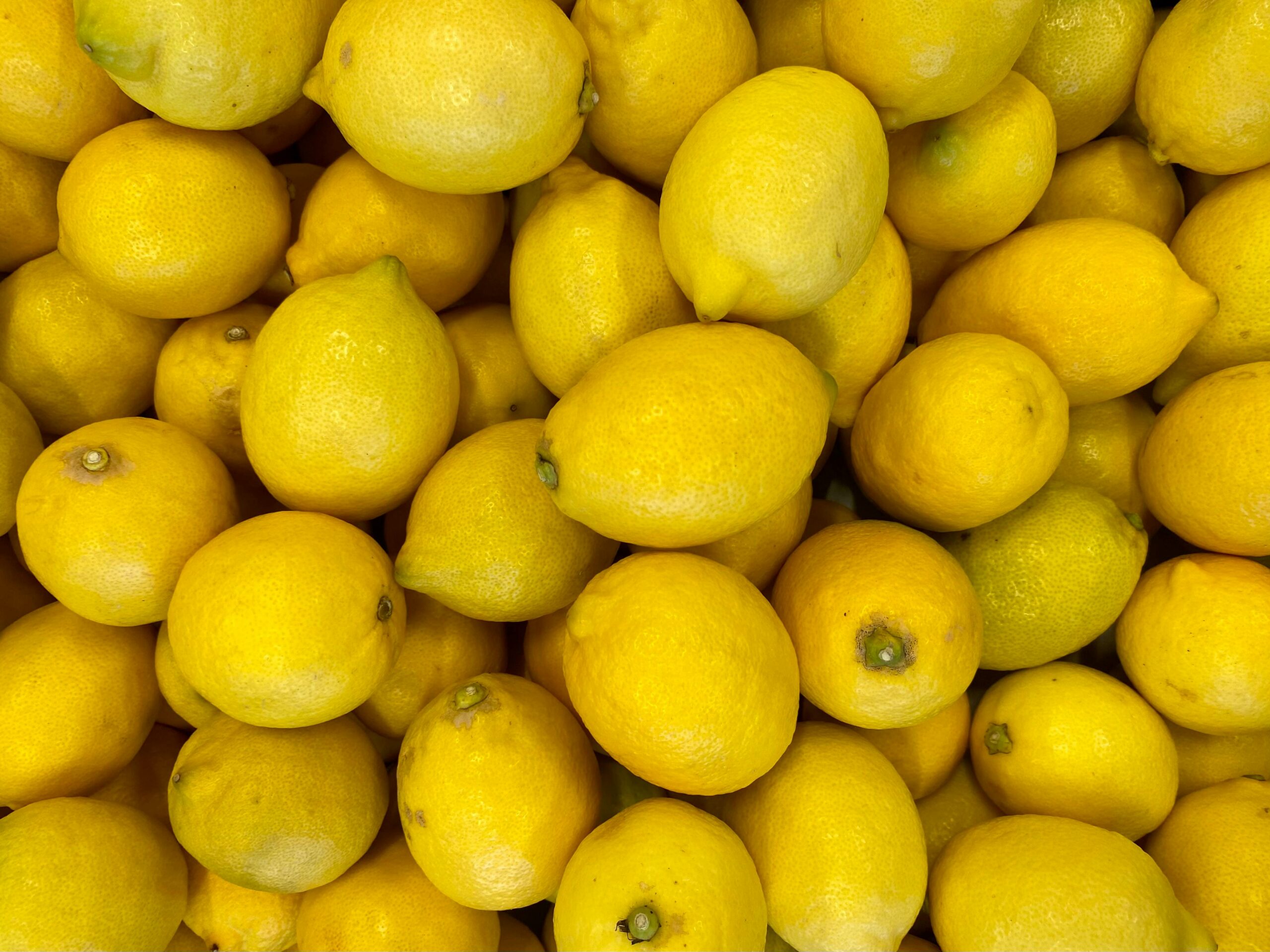
1. Botanical Profile and Origin
Lemon (Citrus limon) is not an ancestral species but a hybrid of citron (Citrus medica) and sour orange (Citrus × aurantium), the latter itself a pomelo × mandarin admixture. Whole-genome analyses by Wu et al. (2018, Nature) strongly support this hybrid ancestry, the lemon genome derives predominantly from citron and sour-orange ancestry (with the latter contributing mandarin and pomelo genomic segment), and place the genus’s broader diversification in Southeast Asia, particularly around the eastern Himalayan foothills and adjacent Indo-Burmese region, from which the parental species, and later the lemon itself, radiated westwards. This intermediate sensory profile (sharper than orange, less bitter than citron) contributes to lemon’s culinary versatility and is reflected in a phytochemical composition distinct from either parent lineage.
Lemon spread across the Mediterranean basin via Arab agricultural networks between the 9th and 11th centuries, cultivated extensively in Sicily, southern Italy and the Iberian Peninsula. From there, Iberian navigators carried it to the Americas in the 15th-16th centuries, where it found a second centre of production in Mexico and California.
Among the dozens of cultivated varieties, Eureka, Lisbon, Verna, Femminello and others, one stands apart botanically. The Meyer lemon (Citrus × meyeri) is not a true lemon at all but a separate, more recent hybrid, likely involving complex admixture among citron, mandarin and/or sweet-orange lineages, a second layer of hybridisation on top of the original citron × sour-orange cross. Discovered in China in the early 20th century and introduced to the United States by USDA explorer Frank N. Meyer in 1908, it carries a thinner, more aromatic peel, substantially lower acidity than common Eureka or Lisbon cultivars, and floral notes absent from those true-lemon varieties. Its lower acidity makes it popular in pastry and beverages, but it is more perishable and not the variety used in industrial juice or essential-oil production.
2. Nutritional Composition
Without peel · With peel · Raw juice · Per 100 g
Source: USDA FoodData Central SR Legacy · All values per 100 g · % DV based on FDA 2,000 kcal/day reference
3. Bioactive Compounds Specific to Lemon
3.1 Citric acid
Citric acid accounts for approximately 5% of lemon juice by mass (~49 g/kg), markedly higher than orange juice (≈1%) and slightly above most lime cultivars. Beyond its sour taste, citric acid is the precursor to urinary citrate, a recognised inhibitor of calcium-oxalate crystallisation in the kidney.
3.2 Eriocitrin
(eriodictyol-7-O-rutinoside) is a flavanone glycoside found at notable concentrations in lemon and lime but only in trace amounts in other common citrus. After ingestion it is hydrolysed by intestinal bacteria to eriodictyol and downstream phenolic acid metabolites, which are absorbed into the bloodstream and may contribute to the systemic redox effects observed in experimental models. Mechanistic studies have linked eriocitrin to activation of the Nrf2 pathway, reduced hepatic lipid accumulation and modulation of inflammatory markers. Human data remain limited.
3.3 Hesperidin and other flavonoids
Lemons also contain hesperidin, diosmin and trace amounts of naringin, flavanones shared with the broader citrus family and covered in detail in the Citrus Fruits article. Hesperidin sits primarily in the albedo (the white inner peel), which is why whole-fruit consumption or marmalades retain more of this compound than strained juice.
3.4 D-limonene
is a monoterpene concentrated in the peel and the dominant component (typically 60-70%) of cold-pressed lemon essential oil. It is widely Generally Recognised As Safe (GRAS) by the US FDA as a flavouring agent and used industrially in cleaning products, fragrances and supplements. Animal and in vitro studies suggest gastroprotective and anti-inflammatory effects, but clinical evidence in humans is limited to two small, methodologically heterogeneous trials described in small studies associated with a 2002 US patent filing, rather than replicated in large peer-reviewed clinical trials.
4. Clinical Evidence: What the Research Actually Shows
4.1 Kidney stone prevention
The strongest modern clinical evidence for lemon is the PROBE trial (Ruggenenti et al., 2022, eClinicalMedicine), a pragmatic, prospective randomised open trial with blinded endpoint assessment, conducted in 203 patients with recurrent calcium-oxalate nephrolithiasis at a single nephrology centre in Bergamo, Italy. Patients received standard dietary counselling alone, or the same diet plus 60 mL of fresh lemon juice twice daily (with hypocitraturic patients in both arms also receiving potassium citrate), and were followed for two years. The pre-specified two-year primary endpoint did not reach statistical significance (HR 0.62, 95% CI 0.35-1.07, p = 0.089), in part because adherence to the lemon-juice regimen fell from 79% at six months to 68% at one year and 48% at two years. An exploratory analysis restricted to the first year, when adherence was still acceptable, showed a significant reduction in stone recurrence in the lemon-juice arm (HR 0.43, 95% CI 0.20-0.89, p = 0.028).
The mechanism deserves close attention because it changes how the result should be interpreted. Older studies, Seltzer et al. (1996, J Urol) in 12 hypocitraturic patients, and Penniston et al. (2007, Urology) in 63, had shown that lemonade therapy raised 24-hour urinary citrate excretion (in Seltzer, from a mean of 142 to 346 mg/day) and total urine volume (in Penniston, by ~763 mL/day). The PROBE trial, with a larger sample and rigorous methodology, did not replicate either finding: urinary citrate and total volume were statistically indistinguishable between groups across the two-year follow-up. The PROBE authors hypothesised instead that the protective signal, if real, may be mediated by a reduction in urinary sodium excretion observed at six months in the lemon-juice arm.
Two further caveats temper the result. First, the strongest signal comes from an exploratory rather than pre-specified analysis, and was driven in large part by declining adherence, a real-world limitation rather than a biological one. Second, pharmacological potassium citrate remains more effective per dose; lemon juice is most appropriately framed as an adjunct or as a preferred option. A 2025 systematic review reached a similar conclusion: citrus juices can support urinary chemistry, but with substantial heterogeneity across trials.
4.2 Cardiometabolic markers
Preclinical work has linked eriocitrin to improvements in lipid profile, hepatic steatosis and adiposity in rodent and zebrafish models. Translation to humans is at an early stage. A 12-week placebo-controlled trial by Ribeiro et al. (2019, Phytotherapy Research) randomised 103 pre-diabetic adults to placebo or one of three doses (200, 400 or 800 mg/day) of the standardised lemon-flavonoid extract Eriomin®. The active arms showed modest reductions in fasting glycaemia (~5%), HbA1c, HOMA-IR and inflammatory markers (hs-CRP, IL-6), alongside an approximately 15% increase in GLP-1 secretion. These findings are promising but caveat-laden: the extract is proprietary (not pure eriocitrin), the per-arm sample size is small (≈25), the duration is short, and the trial was funded by the product’s manufacturer. The result is best read as hypothesis-generating, not as a basis for clinical recommendations.
4.3 Reflux and gastroesophageal symptoms
The relationship between lemon and reflux is paradoxical. Whole lemon juice is acidic enough to trigger symptoms in sensitive individuals, yet encapsulated D-limonene from the peel has been investigated for the opposite indication. Two small clinical studies cited in a 2022 narrative review (Schulz, Ahuja & Slavin) reported symptom relief in patients with chronic heartburn or GERD after 14 days of 1,000 mg D-limonene daily. Sample sizes were small (≤19 participants), only one trial was placebo-controlled, both were performed under a 2002 US patent application, and no large randomised trial has replicated these findings. The mechanism is hypothesised to involve mucosal coating and altered oesophageal motility rather than acid neutralisation.
4.4 What the evidence does not support
Several widely repeated claims fall outside the evidence base. Lemon water does not “alkalise” the blood, systemic pH is tightly regulated by the kidneys and lungs and is unaffected by dietary acid load in healthy adults. Diet can influence urinary pH, but not systemic blood pH in healthy individuals. It does not “detoxify” the liver beyond what hydration alone accomplishes. And while substituting unsweetened lemon water for sugary beverages can support weight management, the lemon itself confers no measurable thermogenic or fat-oxidising effect.
5. Practical Use
There is no established daily intake recommendation for lemon. For the kidney-stone indication, the PROBE-trial protocol of 120 mL fresh juice per day (roughly 2 medium lemons) represents the evidence-based reference point. For everyday culinary use, the juice of half to one lemon (15-30 mL) delivers a useful amount of vitamin C and flavour without practical concern.
Whole-fruit preparation, preserved lemons, marmalade, candied peel, captures the flavonoids in the albedo and peel that strained juice loses. For people specifically interested in eriocitrin or D-limonene, these preparations or unstrained whole-fruit blends are more efficient than juice alone.
6. Culinary Applications
Lemon’s culinary range is unusually wide for a single ingredient. Its three commercially relevant parts: juice, zest and peel, each carry different chemistry and behave differently in heat and time. Juice provides acidity and brightness, zest carries aromatic oils (citral, limonene) that are heat-sensitive and best added at the end of cooking, and the peel contributes both bitterness and the deepest flavonoid concentration.
Across cuisines, lemon appears as a tenderising marinade base (Mediterranean, Middle Eastern), as a finishing acid for fish and vegetables, as a preserve (the salted preserved lemons of North African cuisine), as a curd or tart filling in European pastry, and as an aromatic essential oil in confectionery and beverages. Its capacity to brighten flavour without dominating it is the basis of its global presence.
6.1 Real lemon versus its derivatives
A note on the substantial industry around lemon-derived products. Lemon juice from concentrate (the dominant form in retail bottles) is reconstituted from juice that has been heat-evaporated, sometimes flash-pasteurised twice, and often re-supplemented with citric acid and lemon oil for flavour recovery. It is functionally similar to fresh juice for acidulation but carries lower levels of heat-sensitive volatiles and reduced flavonoid content.
Citric acid (E330) sold as a food additive is not extracted from lemons, industrially around 90% of the world supply is produced by fermentation of Aspergillus niger on sugar substrates (corn, beet or molasses). It is chemically identical to the citric acid in lemon, but provides none of the flavour, vitamin C or flavonoids. It is the active ingredient in most commercial “sour” candies, effervescent vitamin tablets, and many cleaning products.
Lemon essential oil is cold-pressed from the peel and standardised to roughly 60-70% D-limonene. It is used in confectionery, perfumery and cleaning products. Food-grade quantities are typically very small; supplemental doses (1,000 mg D-limonene capsules) are an entirely different exposure category. Essential oils are not interchangeable with fresh lemon and should not be ingested undiluted.
7. Precautions
- Dental erosion. With a pH around 2.0-2.5, lemon juice, and habitual lemon water, can demineralise tooth enamel over time. Drinking through a straw, rinsing with plain water afterwards, and avoiding brushing for at least 30 minutes after acidic exposure all reduce risk.
- Acid reflux. Whole-fruit lemon juice may trigger symptoms in people with gastroesophageal reflux disease, despite the separate (and less well-evidenced) signal for encapsulated D-limonene as a potential therapeutic. The PROBE trial also reported significantly more gastric pyrosis in the lemon-juice arm (21% vs 1%), a clinically meaningful adverse event to consider for habitual high-dose intake.
- Oral allergy syndrome. Cross-reactivity between citrus and birch or mugwort pollens can produce mild oral itching or swelling in sensitised individuals. True systemic lemon allergy is rare but documented.
- Photosensitivity from peel oils. Furocoumarins (particularly bergapten) present in lemon peel oil can, on direct skin contact followed by sun exposure, cause phytophotodermatitis, sometimes called “margarita burn.” Wash hands after handling zest in the sun.
- Pesticide residues in the peel. Post-harvest fungicides, most notably imazalil and thiabendazole, are among the residues most frequently detected on citrus in EFSA monitoring and concentrate in the peel, where simple rinsing does not remove them. Because zest is a meaningful culinary contribution to the dish in which it appears, organic production reduces the likelihood of post-harvest fungicide residues and is generally preferred when the peel is consumed, though it is not an absolute guarantee. The juice alone is far less affected.
8. Conclusion
Lemon’s nutritional case is narrower but more specific than its cultural ubiquity suggests. Beyond a useful contribution of vitamin C, the science converges on two genuinely lemon-specific actors: citrate, which underwrites the best-evidenced clinical use in calcium-oxalate stone prevention, and eriocitrin, whose mechanistic profile is interesting but whose human trials remain at an early stage. The kidney-stone evidence, anchored by the 2022 PROBE trial, supports lemon juice as an adjunct in patients with recurrent calcium-oxalate stones, even if its precise mechanism is still debated.
The detox and alkalising claims that often accompany lemon do not survive scrutiny.
For most readers, the practical implications are unchanged by the science: use lemon liberally as an acid, a flavouring and an everyday source of vitamin C, choose organic, especially when the peel is part of the recipe, and treat “functional” claims for lemon water with the same scepticism you would apply to any short-cut to health.
Select the form, adjust the weight, and explore nutrients per serving.
─────────────────────────────
This article is part of Bem Bloom’s Citrus Fruits series. All information is provided for informational purposes only. It is not a substitute for professional medical or nutritional advice. Consult a qualified healthcare professional before making significant changes to your diet.