
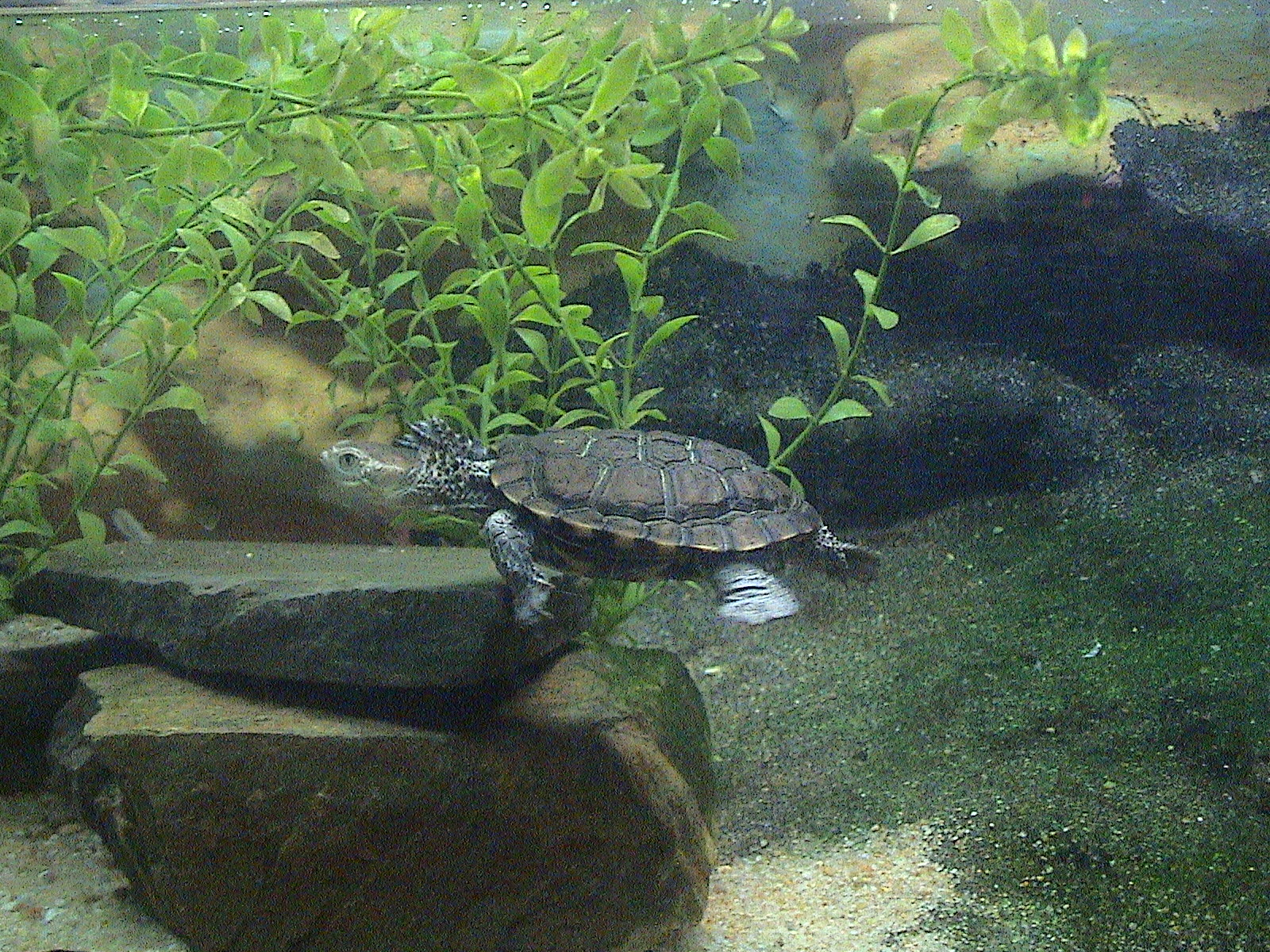
In 1953, a schoolboy found a small, flat-headed turtle on a road near Perth, Western Australia. The animal he picked up had not been seen by scientists since a single specimen was collected from the same region in 1839 and shipped to Vienna, where it sat in a museum drawer for six decades before anyone described it formally. By the time the formal description was published in 1901, the species was assumed to be extinct. The schoolboy’s roadside encounter changed that assumption, and set in motion one of the most sustained wildlife recovery efforts in Australian history.
The western swamp turtle (Pseudemydura umbrina) is one of Australia’s rarest reptiles. Fewer than 25 mature individuals survive in their native swamps north of Perth. It is the only living member of its genus, and the sole representative of an entire subfamily, Pseudemydurinae, that diverged from other chelid turtles millions of years ago and has been largely unchanged since the early Miocene. Fossil specimens from Riversleigh in Queensland are nearly identical to living animals. What has changed, dramatically and dangerously, is the landscape the species depends on.
1. Species at a Glance
| SPECIES AT A GLANCE | |
|---|---|
| Common Name | Western Swamp Turtle; Western Swamp Tortoise |
| Scientific Name | Pseudemydura umbrina |
| Family | Chelidae (Australo-American side-necked turtles) |
| IUCN Status | Critically Endangered (CR) |
| Wild population | 15-25 mature individuals at native sites; ~200 total including translocated |
| Range | Swan Coastal Plain, north of Perth, Western Australia; translocations underway 200-300 km south |
| Captive breeding | Perth Zoo: 1,300+ bred since 1988; 1,100+ released to wild sites as of mid-2024 |
| Conservation note | Widely regarded as the first vertebrate deliberately relocated outside its historic range in response to climate change |
2. Biology and Behaviour
The western swamp turtle is a small, short-necked chelid, a turtle with a broad, flat brown shell and a squarish carapace reaching at most 155 mm in males and 135 mm in females. The neck is short and covered with horny tubercles, unlike the famously elongated necks of its Australasian relatives in the family Chelidae. Adults weigh up to 550 g (males) and 410 g (females). Hatchlings emerge weighing between 3.2 and 6.6 grams.
The species is seasonally active in a highly unusual pattern for a reptile: it feeds and breeds exclusively in winter and early spring, when rain fills the shallow ephemeral swamps it inhabits, then enters a state of summer dormancy called aestivation when the swamps dry to cracked clay in late spring. During aestivation, the turtle buries itself in a humid refuge under leaf litter or within clumps of vegetation, slowing its metabolism to a minimum until the autumn rains return. This reversal of the typical reptile activity calendar, active in cold, wet months; dormant in warm, dry months, is what makes the species highly sensitive to rainfall patterns.
The western swamp turtle is also notable for several anatomical and behavioural peculiarities. It is the only turtle or tortoise species in the world known to dig its nest with its front limbs, all other species use their hind limbs. It produces a single clutch of three to five eggs per year, with no opportunity for a second clutch if the first fails. Females require at least two consecutive years of adequate rainfall to produce eggs successfully; in years of drought, breeding may simply not occur. Lifespan is estimated at up to 70 years, making each adult a decades-long investment in population continuity.
3. Habitat: The Shrinking Swamps of the Swan Coastal Plain
The species evolved in the ephemeral swamp systems of the Swan Coastal Plain, a narrow coastal strip of flat, low-lying land that stretches north from Perth, underlain by sandy or clay-over-sand soils that hold winter rainfall in shallow seasonal wetlands. These swamps are not year-round water bodies; they fill with rain between May and October and dry completely in the summer heat. For the western swamp turtle, this cycle of filling and drying is the ecological engine of its entire life: it times its feeding, growth, mating, nesting, and hatching to the hydroperiod.
What was once a scattered network of suitable swamps across the Swan Coastal Plain has been reduced to a handful of sites by land clearing, swamp drainage, urbanisation, and groundwater extraction. The species is now confined to two small nature reserves north of Perth, Ellen Brook Nature Reserve (67 ha) and Twin Swamps Nature Reserve (141 ha), plus several translocation sites. The habitat loss that occurred during the 20th century as Perth expanded was extensive and largely irreversible. The swamps that once held self-sustaining populations on what is now airport land, agricultural fields, and suburban streets are gone.
What remains is being compromised from a different direction. Perth’s rainfall has declined by approximately 20% since the 1970s, a trend attributed to the broader drying of south-western Australia driven by climate change and consistent with regional projections for continued decline. Swamps that held water for five to seven months in the 1960s now often hold water for two to three. Since 2003, artificial bore water pumping has been required to maintain minimum water levels at Twin Swamps. The turtle’s habitat is being squeezed from two sides simultaneously: urban expansion across the landscape, and a drying atmosphere from above.
4. The Threats This Species Faces
| Threat | Mechanism | Current Status |
|---|---|---|
| Habitat loss & drainage | Urban expansion, agriculture, and swamp drainage have destroyed the vast majority of original habitat on the Swan Coastal Plain. The species’ range was reduced to two small nature reserves north of Perth. | Historical and ongoing. Most suitable habitat has already been lost; remaining sites are surrounded by urban or agricultural land. |
| Declining rainfall (climate change) | Perth’s annual rainfall has declined markedly since the 1970s. Swamps that remained wet for 5–7 months per year in the 1960s now often hold water for only a fraction of that time. The turtle requires adequate water to feed, grow, and breed. | The most serious long-term structural threat. Cannot be mitigated at existing sites, drives the case for southward translocation to cooler, wetter areas. |
| Groundwater extraction | Bore water pumping in the Perth region lowers the water table, further reducing hydroperiod in swamps that are already marginal. Twin Swamps Nature Reserve has required artificial water pumping since 2003. | Ongoing at existing sites. A growing maintenance burden for reserve managers. |
| Introduced predators | The European red fox preys on hatchlings and eggs. Other predators include ravens, feral pigs, and bandicoots. All current wild sites are managed within predator-proof fencing or under active fox baiting. | Controlled at managed sites; unmanaged at any future translocation location and a key planning variable for new sites. |
| Small population dynamics | With fewer than 25 mature individuals at native sites, the species is highly vulnerable to demographic stochasticity: chance variation in births, deaths, and sex ratios. One bad season of low recruitment can meaningfully shift the trajectory. | Permanent background risk; partially mitigated by captive breeding and annual releases of zoo-bred juveniles. |
| Poaching | The turtle’s rarity and uniqueness makes it attractive to collectors. Its small range and accessible reserves increase vulnerability to targeted poaching. | Lower-level but documented threat; surveillance and fencing at known sites reduce risk. |
5. From the Brink: A Conservation Timeline
The western swamp turtle has been the subject of one of Australia’s longest and most intensive species recovery programmes. It was one of the first species to have a formal Recovery Team in Australia, one of the first to have reserves specifically created for its protection, and one of the first to enter a dedicated captive breeding programme at a zoo.
| Year | Event |
|---|---|
| 1839 | First specimen collected by Ludwig Preiss near Perth; sent to Vienna Museum. Species then lost to science. |
| 1901 | Formally described as Pseudemydura umbrina by Friedrich Siebenrock, from the 1839 museum specimen. Species believed extinct. |
| 1953 | Rediscovered by a schoolboy who found one on a road near Perth. Believed extinct for over a century. |
| 1966 | Ellen Brook Nature Reserve (67 ha) and Twin Swamps Nature Reserve (141 ha) established north of Perth to protect remaining habitat. |
| 1980s | Wild population drops to fewer than 30 individuals. Perth Zoo begins emergency captive breeding programme in 1988. |
| 1994 | First Recovery Plan published. Recovery Team, one of Australia’s first, established in 1990. |
| 2003 | Artificial bore water pumping begins at Twin Swamps as rainfall decline makes natural hydroperiod insufficient. |
| 2016 | First deliberate climate-change translocation of any vertebrate: 35 captive-bred juveniles released to sites 250-300 km south of native range. |
| 2024 (mid) | Perth Zoo has reared more than 1,300 western swamp turtles since 1988; 1,100+ released to wild and translocation sites. Wild population at native sites: 15-25 mature adults. |
The captive breeding programme at Perth Zoo has been the central pillar of the species’ survival. When breeding began in 1988, the wild population had fallen to approximately 30 individuals. Dr Harriet Mills, Perth Zoo’s Science Program Leader, has described the programme in direct terms: “When we started breeding in the late 1980s, the species was down to the last handful of animals, so without this breeding programme it’s likely we would have lost this species.” By mid-2024, the Zoo had reared more than 1,300 turtles and released more than 1,100 into managed wild sites, an extraordinary output from approximately 12 active breeding pairs.
6. A First in Conservation History: Moving an Animal Because of Climate Change
In 2016, conservation scientists made a decision that had never been made before for any vertebrate: they moved 35 captive-bred juvenile western swamp turtles to sites approximately 250 to 300 kilometres south of the species’ known native range, not to restore a historical population, but to proactively place the animals in a climate that would remain suitable as Perth’s local conditions continue to deteriorate. The western swamp turtle became the first vertebrate ever deliberately translocated expressly because of climate change.
The scientific rationale was clear. Perth’s hydroperiod, the annual window of wet, active season, is shrinking. Climate projections indicate it will continue to shrink. The southwest corner of Western Australia, by contrast, has longer and more reliable winter rainfall, cooler temperatures, and swamp systems with extended hydroperiods. Research led by Associate Professor Nicola Mitchell of the University of Western Australia demonstrated that juvenile turtles released to southern sites could grow at comparable rates to those at native northern sites, despite the colder temperatures, because the longer active season compensated for reduced thermal gain per day.
The move was not without controversy. Critics raised concerns about the ecological risks of introducing a species into habitats it has never historically occupied, and about the precedent it might set for other species. But for the western swamp turtle, with a native habitat made increasingly untenable by a shifting climate it cannot track by natural dispersal, hemmed in by urban sprawl and farmland on all sides, assisted colonisation may represent the only realistic pathway to long-term persistence.
7. What the Western Swamp Turtle Shows Us
Seventy years of conservation effort have kept the western swamp turtle alive. Without the reserves established in 1966, without the breeding programme begun in 1988, without the fox control and water management and annual releases of zoo-reared juveniles, this species would almost certainly be extinct today. The investment, sustained across multiple government terms, research programmes, zoo budgets, and community fundraising campaigns, has been real and consequential.
But the species also illustrates a harder lesson: that conservation effort directed entirely at stabilising a population in a deteriorating habitat can delay extinction without preventing it. The swamps north of Perth that are the turtle’s native home are becoming less viable with each passing decade. Pumping bore water into reserves is not a long-term solution; it is an intervention that buys time for better interventions to be planned and implemented.
The southward translocation programme represents the next generation of conservation thinking for this species: not just protecting what exists, but proactively engineering the conditions for persistence in a changed world. Whether it succeeds, whether captive-bred turtles released into new southwestern swamps will eventually establish self-sustaining breeding populations, will not be known for decades. The species may live for 70 years. Its conservation story is written in the same slow timescale.
Sources and Further Reading
- IUCN Red List. Pseudemydura umbrina. iucnredlist.org
- DBCA Western Australia (September 2024). Boost to Western Swamp Tortoise Population North of Perth. dbca.wa.gov.au
- Perth Zoo. Western Swamp Tortoise Breeding Program. perthzoo.wa.gov.au
- Mitchell, N. et al. / NESP Threatened Species Hub. Assisted Colonisation of Australia’s Rarest Reptile: The Western Swamp Turtle. nespthreatenedspecies.edu.au
- University of Western Australia (May 2023). Threatened Turtles Carry the Weight of Climate Change on Their Backs. uwa.edu.au
- Burbidge, A. & Kuchling, G. (2004). National Recovery Plan for the Western Swamp Tortoise (Pseudemydura umbrina). DCCEEW.
- Science / AAAS (2016). Relocating Australian Tortoise Sets Controversial Precedent. science.org
- Healthy Rivers WA. Western Swamp Tortoise. rivers.dwer.wa.gov.au
- The Conversation / Burbidge, A. Australian Endangered Species: Western Swamp Tortoise. theconversation.com