
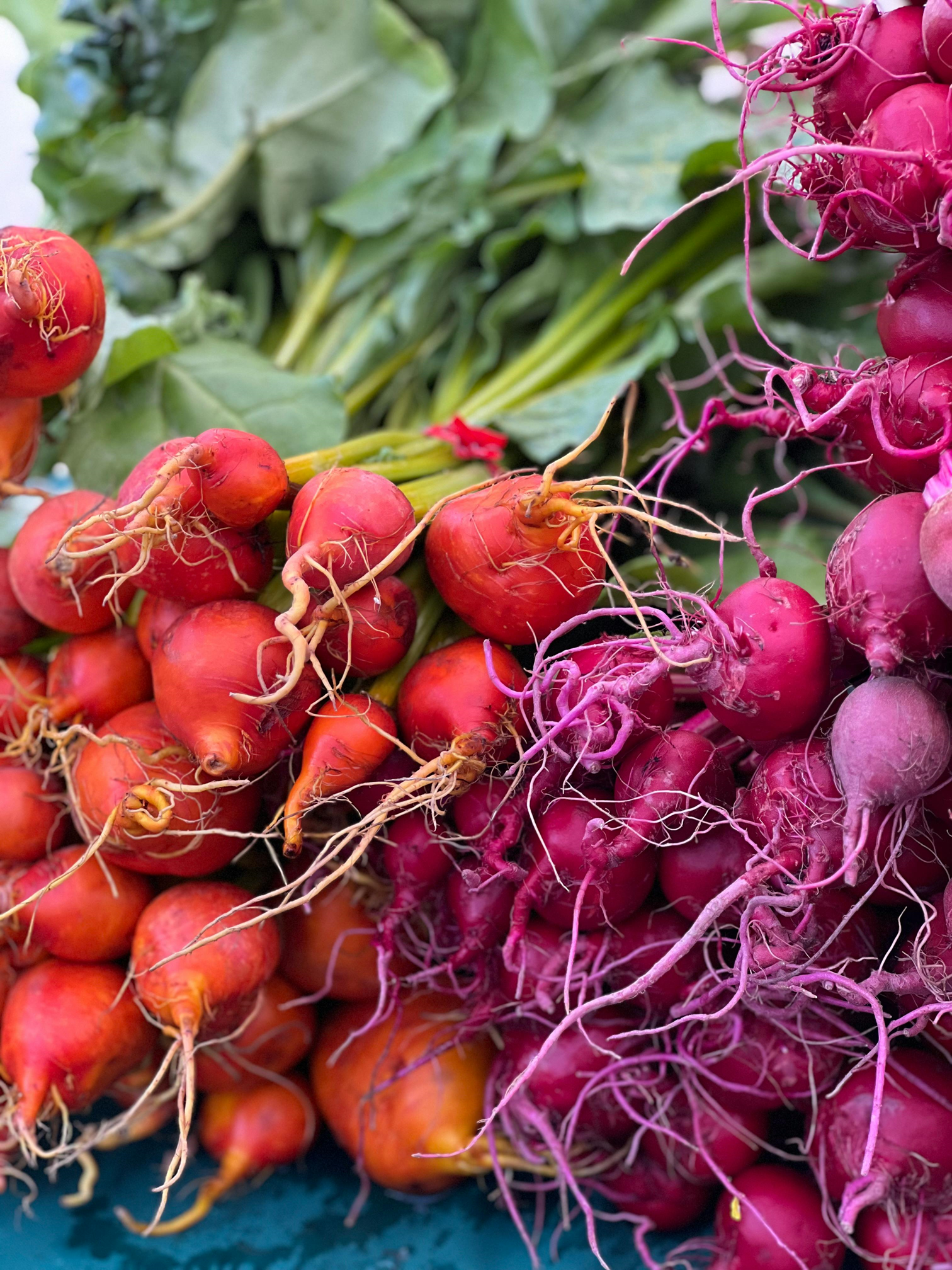
An Overview of Market Dynamics, Production, Distribution, Consumer Trends, and Sustainability.
Why the Organic Food Market Matters?
The global organic food market has undergone a significant transformation over the past two decades. Once considered a niche segment catering primarily to health-conscious individuals, organic food has evolved into a mainstream phenomenon reshaping agricultural practices, retail strategies, and consumer expectations worldwide.
1. Organic Food Market Size: Growth Projections and Forecasts
The global organic food market reached substantial scale in 2024-2025. Precedence Research estimates the market at approximately €235 billion in 2025, rising to €262 billion in 2026, while The Business Research Company projects higher figures of €292 billion in 2025 and €335 billion in 2026. FiBL and IFOAM, tracking verified retail sales of certified organic products across 183 countries, reported €144.9 billion in global sales in 2024. These significant differences reflect variations in market definitions and scope: FiBL’s data is strictly based on certified retail sales; conversely, consulting firms provide broader market insights by accounting for activities throughout the full value chain.
Despite methodological differences, there is strong consensus on core trends. The organic food sector is growing significantly faster than conventional food markets, with growth accelerating rather than plateauing. Projected compound annual growth rates (CAGR) for 2025-2034 range from roughly 10% to 15%, positioning organic food as one of the most structurally dynamic segments within the global food system over the coming decade.
2. Geographic Distribution: Where Organic Food Is Consumed and Traded?
Organic food consumption exhibits striking geographic concentration. North America and Europe together account for approximately 85% of global retail sales, despite representing less than 15% of the world’s population. The United States remains the single largest market, with retail sales of approximately €60.4 billion in 2024, followed by Germany at €17.0 billion. The European Union collectively constitutes the second-largest market at €49.5 billion.
Per capita spending patterns reveal substantial disparities even among developed nations. According to FiBL data for 2024, Switzerland leads globally with annual per capita organic spending of €481, followed by Denmark and Austria. The EU average stands at approximately €104, masking enormous internal variation: while Denmark and Austria exceed €300 per capita, countries like Romania spend less than €2 per person annually, a 180-fold gap within the same economic bloc.
Market share provides another instructive metric. Switzerland leads globally with 12.3% organic market share, followed by Denmark, making them the leading nations in organic adoption. The EU average hovers around 4%, while the United States and major European markets like Germany and France range between 6-7%.
The Asia-Pacific region represents the most significant emerging opportunity for organic markets, driven by rising middle-class incomes, increasing health awareness, and growing retail infrastructure in countries such as China, India, and South Korea. While currently accounting for a small share of global organic retail, APAC markets are recording double-digit growth rates that could gradually shift the geographic balance of organic consumption.
Africa’s role in organic supply chains is increasingly significant. The continent is the second-largest region by number of organic producers after Asia, with nearly one million certified farmers, predominantly smallholders producing high-value export crops such as coffee (Ethiopia, Tanzania), cocoa (Uganda), olives (Tunisia), and nuts (Kenya).
International trade plays a crucial role in organic supply chains. The EU imports significant volumes of organic products from developing countries: Ecuador (bananas), China (oilcakes), Ukraine (cereals), Peru, and the Dominican Republic rank among the top suppliers. Türkiye has emerged as the fastest-growing exporter to the EU, with a 44% increase in organic shipments in recent years. The Netherlands serves as the primary entry point and distribution hub for organic imports into the European market.
3. Organic Farmland and Global Production Statistics
Global organic farmland held steady in 2024, with nearly 98,9 million hectares under certified organic management, maintaining the production base established in prior years. This represents approximately 2.1% of the world’s total agricultural land, managed by 4.8 million organic producers across 183 countries.
Regional distribution of organic farmland is highly uneven. Oceania dominates with 53.2 million hectares, more than half of the global total, almost entirely attributable to Australia’s 53 million hectares (primarily low-intensity grazing land). Europe follows with 19.6 million hectares, and Latin America with 10.3 million hectares. By individual country, Australia leads by area, followed by India (4.5 million hectares) and Argentina (4 million hectares).
Organic shares of national farmland vary dramatically. Liechtenstein leads globally with 43.5% of its agricultural land under organic management, followed by Austria (27.3%) and Uruguay (25.4%). Within the EU, organic farmland reached 11.1% of total agricultural area in 2024, approaching the bloc’s Farm-to-Fork Strategy target of 25% by 2030, though considerable acceleration will be required to meet this ambition.
India stands out as the country with the most organic producers (2.36 million farmers), reflecting the prevalence of smallholder organic agriculture in developing regions. Spain remains Europe’s largest organic farmland holder at 2.9 million hectares, followed by France (2.7 million hectares) and Italy (2.5 million hectares). Africa has emerged as one of the most dynamic regions for organic farmland expansion, with its certified area more than doubling over the past decade to reach 3.4 million hectares.
4. Distribution Channels: How Organic Food Reaches Consumers?
The distribution landscape for organic food has evolved considerably as the sector has mainstreamed. According to Grand View Research and other market analysts, supermarkets and hypermarkets dominate organic retail, commanding between 56-60% of global market share. These large-format retailers have become one-stop destinations for organic products, leveraging their purchasing power and established supply chains to offer competitive pricing.
The e-commerce channel represents the fastest-growing distribution segment, with a projected CAGR of 14-15% through 2030. Online platforms and retailer-branded delivery services have expanded organic accessibility, particularly among younger, urban consumers who prioritise convenience. Subscription boxes and farm-to-door models have gained traction, offering curated organic selections with home delivery.
Specialty organic retailers and large-format natural food chains (sometimes referred to as ‘supernaturals’ in the U.S. market) maintain significant market presence, accounting for approximately 29% of natural and organic retail sales in the United States, according to Retail Insights data. These stores serve health-conscious consumers willing to pay premium prices for product expertise and curation. Meanwhile, discount retailers have emerged as significant players, demonstrating that organic products can succeed across price-sensitive segments through focused product selections.
Farmers’ markets and direct-to-consumer channels, while representing a smaller market share, remain important for organic’s brand identity and local food movements.
5. Consumer Motivations: Why People Choose Organic?
Understanding why consumers choose organic products is essential for market participants. Research consistently identifies health consciousness as the dominant motivation. A comprehensive review published in Frontiers in Sustainable Food Systems examined studies across developed and developing nations, finding that health concerns drive organic purchasing in countries ranging from Brazil and India to Poland and the United States.
Environmental sustainability ranks as the second most significant motivator. Consumers increasingly recognise the ecological footprint of conventional agriculture and perceive organic farming as a more sustainable alternative. Research from China indicates that while health concerns have a stronger direct effect on purchasing intentions, environmental concerns exert a greater total effect when mediated through social norms and attitudes.
Food safety concerns, particularly regarding pesticide residues, antibiotics, and hormones, constitute another powerful driver. The OTA’s 2024 survey found that U.S. consumers want their food to be ‘clean and safe,’ free from toxic pesticides, GMOs, synthetic hormones, and excessive antibiotics. Single-attribute claims like ‘no added hormones’ and ‘raised without antibiotics’ carry significant weight in purchasing decisions.
Demographic patterns reveal generational differences in organic engagement. Millennials and Generation Z are the most active organic consumers, with food claims like organic, vegan, and allergen-free approximately 40% more important to these younger demographics than to older generations. For baby food, organic adoption is notably high: an U.S.-focused industry survey found that 93% of respondents purchasing baby food chose organic options, though this figure likely reflects the self-selecting nature of the survey sample rather than the general population. Price remains the primary barrier to organic adoption, though research indicates that price sensitivity decreases among highly health-conscious consumers.
6. Health Benefits of Organic Food: What Does Science Say?
The health implications of organic food consumption remain an active area of scientific inquiry. A significant body of evidence addresses the question of pesticide exposure. Multiple intervention studies demonstrate that switching to an organic diet substantially reduces urinary concentrations of pesticide metabolites in both adults and children. This is particularly relevant given that the International Agency for Research on Cancer (IARC) has classified several organophosphorus pesticides and glyphosate as ‘probably carcinogenic’.
Regarding nutritional composition, meta-analyses of 343 peer-reviewed studies have identified measurable differences between organic and conventional crops. Organic produce tends to have higher concentrations of antioxidants and polyphenolic compounds (19-69% higher depending on the specific compound), lower cadmium levels (on average 48% lower), and approximately four times fewer detectable pesticide residues.
For animal products, organic dairy and meat have been shown to contain higher levels of omega-3 fatty acids compared to conventional alternatives. However, the nutritional significance of these differences for overall human health remains a subject of scientific debate, as the magnitude of the differences may be modest in the context of a varied diet.
Epidemiological evidence is more limited but suggestive. The French NutriNet-Santé cohort study (involving approximately 69,000 participants) found that cancer incidence was 2.26% among non-consumers of organic food compared with 1.6% among high organic consumers, with specific associations for non-Hodgkin’s lymphoma and postmenopausal breast cancer. However, observational studies face inherent challenges in controlling for confounding factors, as organic consumers tend to have healthier overall lifestyles. While these associations are promising, definitive causal relationships between organic food consumption and specific health outcomes require further long-term research.
7. Ecological and Environmental Impact of Organic Farming
The environmental implications of organic agriculture are multifaceted and sometimes contested. A comprehensive study from Nature Communications Earth & Environment, reviewing 100 life cycle assessment studies, found no significant differences between organic and conventional systems for global warming potential, eutrophication, or energy use when measured per unit of product mass. However, when measured per unit of land area, organic systems showed lower environmental impacts, highlighting how the choice of metric fundamentally shapes conclusions.
Biodiversity benefits represent one of organic farming’s most consistent environmental advantages. Research from the DOK long-term experiment in Switzerland (spanning over 40 years) demonstrates that organic systems use 92% fewer pesticides and 76% less mineral nitrogen than conventional systems, resulting in enhanced soil biodiversity, including mycorrhizal fungi critical for plant nutrient uptake. Studies consistently show that organic farms support higher populations of beneficial insects, birds, and soil organisms.
Soil health improvements are another well-documented benefit. Organic management practices, including crop rotation, cover cropping, and composting, increase soil organic carbon content, improving soil structure, water retention, and resilience to climate extremes. Research indicates that organic systems can sequester 575-700 kg of carbon per hectare annually, nearly double the rate of conventional systems. The NRDC reports that eliminating synthetic nitrogen fertilisers alone could reduce direct agricultural greenhouse gas emissions by approximately 20%.
8. Regulatory Framework and Organic Certification Standards
Organic certification ensures that products meet defined standards for production, processing, and handling. The two largest regulatory frameworks are the USDA National Organic Program (NOP) in the United States and the EU Organic Regulation in Europe. Both systems share core principles: prohibiting synthetic pesticides, synthetic fertilizers, GMOs, and routine antibiotic use, while differing in specific requirements and enforcement mechanisms.
A significant regulatory development in 2024 was the implementation of the USDA’s Strengthening Organic Enforcement (SOE) rule, which came into full effect in March 2024. This rule strengthens traceability requirements throughout the organic supply chain, mandates certification for importers and certain intermediaries, and enhances fraud prevention measures. All organic imports to the U.S. must now be accompanied by electronic NOP Import Certificates through the Global Organic INTEGRITY Database (GLOBAL).
The EU updated its organic regulation (EU 2018/848) with enhanced provisions on imports, group certification for small farmers, and strengthened controls. Equivalency agreements between major markets (EU, U.S., UK, Switzerland, Japan, Korea, and others) facilitate international trade by recognising comparable organic standards, though not all agreements are fully reciprocal, particularly for animal products.
Labelling requirements vary by jurisdiction. In the U.S., products must contain at least 95% certified organic ingredients to use the USDA Organic seal, while products with 70-94% organic content may be labelled ‘made with organic’ ingredients. The EU applies similar thresholds. Third-party certification bodies, accredited by government authorities, conduct annual inspections (both announced and unannounced) to verify compliance with organic standards.
Conclusion:
The organic food market is a structurally significant and accelerating force within the global food system. The data points unambiguously in one direction: organic food is expanding in scale, depth, and mainstream relevance.
Health consciousness and environmental awareness are reshaping purchasing decisions, particularly among younger generations who will drive demand for decades to come. These are not peripheral considerations; they are becoming central to how food systems are evaluated.
Price sensitivity, supply chain complexity, and the challenge of scaling certification in developing regions remain real constraints on how quickly organic can move from a dominant market trend to a dominant market share.
The critical question for the coming decade is not whether organic will grow, but how that growth will be distributed. Will emerging markets develop domestic organic sectors, or will they primarily serve as suppliers to wealthy, developed economies? Will price premiums narrow sufficiently to democratise access, or will organic remain concentrated among higher-income households? The answers will determine whether organic fulfils its potential as a transformative force in global food systems or settles into a stable but limited market segment.
References and Further Reading
1. FiBL and IFOAM – Organics International (2026). The World of Organic Agriculture 2026: Statistics and Emerging Trends. Available at: https://statistics.fibl.org/
2. Organic Trade Association (2024). Consumer Perception of USDA Organic and Competing Label Claims. Available at: https://ota.com/ConsumerPerception
3. Grand View Research (2024). Organic Food And Beverages Market (2024 – 2030). Available at: https://www.grandviewresearch.com/industry-analysis/organic-foods-beverages-market
4. Barański, M. et al. (2014). Higher antioxidant and lower cadmium concentrations and lower incidence of pesticide residues in organically grown crops. British Journal of Nutrition. Available at: https://www.ncbi.nlm.nih.gov/pmc/articles/PMC4141693/
5. European Parliament (2016). Human health implications of organic food and organic agriculture. EPRS Study. Available at: https://www.europarl.europa.eu/RegData/etudes/STUD/2016/581922/EPRS_STU%282016%29581922_EN.pdf
6. Krause, H.M. et al. (2024). Organic cropping systems balance environmental impacts and agricultural production. Scientific Reports. Available at: https://www.nature.com/articles/s41598-024-76776-1
7. USDA Agricultural Marketing Service (2024). USDA Organic Standards. Available at: https://www.ams.usda.gov/about-ams/programs-offices/national-organic-program
8. European Commission (2025). Organic imports into the EU: Facts and Figures. Available at: https://agriculture.ec.europa.eu/system/files/2022-09/agri-market-brief-19-organic-imports_en.pdf
9. Moreira et al. (2024). Organic food has lower environmental impacts per area unit. Communications Earth & Environment. Available at: https://www.nature.com/articles/s43247-024-01415-6
10. Frontiers in Sustainable Food Systems (2025). Cross-cultural variations in motives and barriers for organic food consumption. Available at: https://www.frontiersin.org/journals/sustainable-food-systems/articles/10.3389/fsufs.2025.1493325/full
11. Qi, X. and Ploeger, A. (2021). Values, Motives, and Organic Food Consumption in China: A Moderating Role of Perceived Uncertainty. Available at: https://pmc.ncbi.nlm.nih.gov/articles/PMC8929390/