
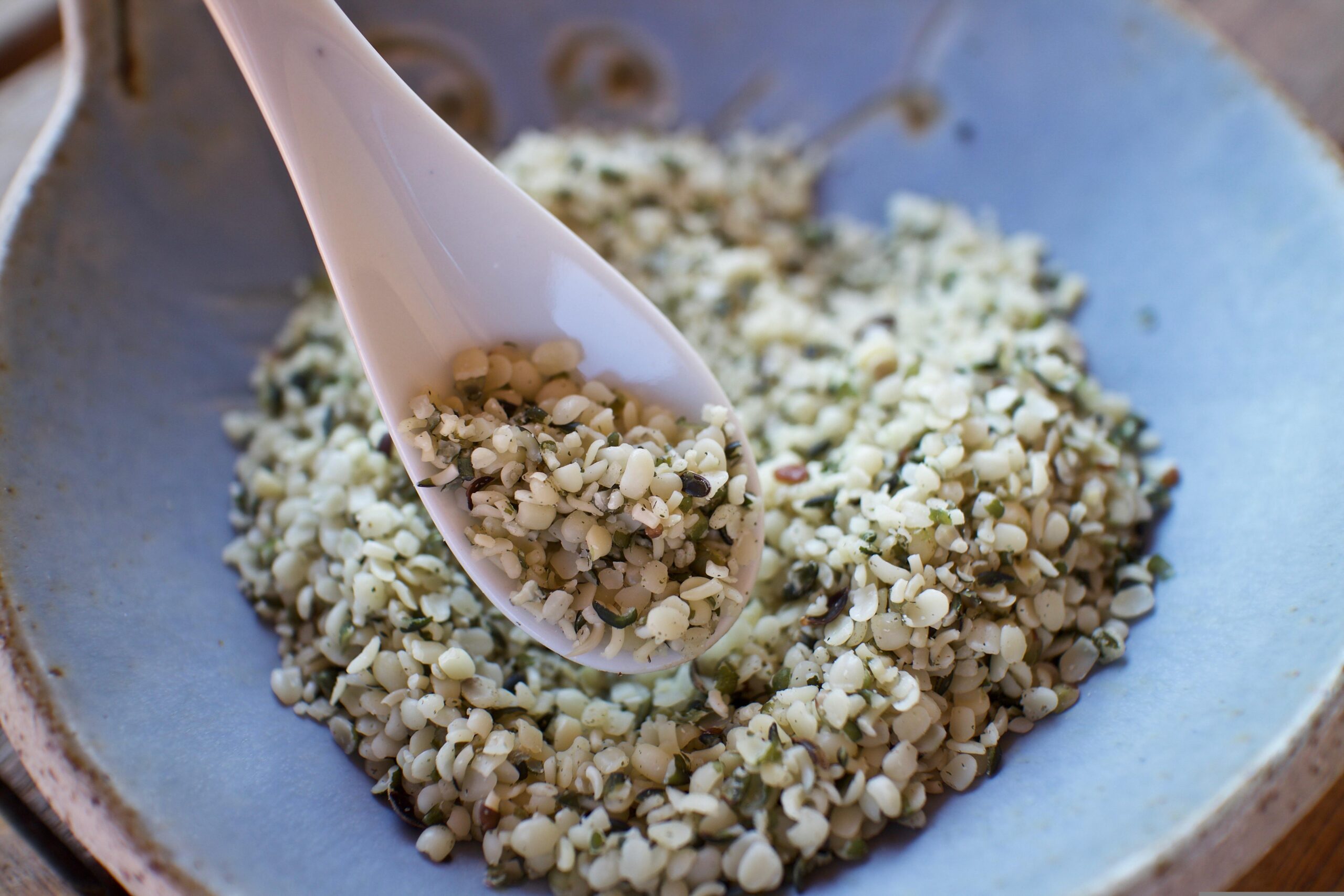
Hemp seeds, the small, nutty-tasting fruits of Cannabis sativa, have been part of human diets in East and Central Asia for at least three millennia, it is one of the few widely consumed culinary seeds that combines a complete set of essential amino acids (with lysine as the limiting amino acid), an omega-6 to omega-3 ratio close to the range often cited as appropriate for whole-diet balance, and a measurable presence of γ-linolenic acid (GLA), a fatty acid otherwise found mainly in borage, evening primrose, and blackcurrant seed oils.
1. Botanical Profile and Origins
Cannabis sativa is an annual herbaceous plant in the Cannabaceae family, cultivated since antiquity for fibre, oil, and seed. Hemp seed (or, more correctly, hemp achene, a small, dry, single-seeded fruit) is roughly 3-4 mm long and 2-3 mm wide, with a hard outer shell enclosing a soft kernel often sold as “hemp hearts“. Canada, France, and China are the principal producers; France alone accounts for over 70 % of European cultivation. Modern food-grade hemp comes almost exclusively from registered low-THC varieties, distinct from Cannabis chemotypes selected for psychoactive resin.
2. Nutritional Composition
Hulled (hemp hearts) · Per 100 g
Source: USDA FoodData Central SR Legacy · Hemp seed, hulled · Per 100 g · % DV based on FDA 2,000 kcal/day reference · Bars exceeding 100% DV are capped and shown in red
Three observations follow from the chart. First, hemp is genuinely protein-dense for a culinary seed, about 31 % of dry weight in the dehulled form, comparable to soybeans and meaningfully higher than chia (~17 %) or flax (~18 %). Second, the fat profile is dominated by the two essential fatty acids, with linoleic acid (omega-6) and α-linolenic acid (omega-3) typically in a 2:1 to 3:1 ratio, a value frequently described in earlier nutrition literature as “optimal”, though the concept of a single ideal ratio is now debated. Third, hemp delivers a clear contribution to dietary intakes of magnesium, phosphorus, and manganese, and meaningful amounts of zinc and iron, useful in plant-forward formulations where these minerals can be marginal.
3. Bioactive Compounds
3.1 Edestin and 2S albumin
The two main storage proteins in hemp seed are edestin (60-80 % of total protein, a globular legumin-type storage protein with high digestibility) and 2S albumin (13-30 % of total protein, a sulfur-rich albumin that contributes meaningfully to methionine and cysteine intake). Both are characterised by high in vitro digestibility, often above 88 %, a low burden of protease inhibitors, and a full set of essential amino acids.
The seminal protein-quality work, House, Neufeld & Leson (2010, J. Agric. Food Chem.), reported PDCAAS values of 0.49-0.53 for whole hemp seed and 0.63-0.66 for dehulled hemp seed (hemp hearts), with lysine as the first limiting amino acid (digestibility 92.1 %), followed by tryptophan and leucine. Dehulling concentrates the kernel proteins and removes the protein-poorer hull, which is why hemp hearts score meaningfully better than the whole seed. These values place dehulled hemp meaningfully below the highest-scoring plant proteins (soy ~0.91; quinoa ~0.73) but well within the range of an effective contributor to a varied plant-based diet, particularly when paired with lysine-rich foods such as legumes.
3.2 Polyunsaturated fatty acids and γ-linolenic acid (GLA)
Hemp seed oil is over 80 % polyunsaturated, dominated by linoleic acid (LA, 18:2 ω-6) and α-linolenic acid (ALA, 18:3 ω-3). What sets hemp apart from flax and chia is the consistent presence of γ-linolenic acid (GLA, 18:3 ω-6), typically 0.7-3 % of the total fatty-acid content, and small amounts of stearidonic acid (SDA, 18:4 ω-3). GLA is the immediate metabolic product of LA via the Δ6-desaturase enzyme, and is otherwise found commercially mainly in borage (~21 % GLA), blackcurrant (~17 %), and evening primrose oils (~9 %).
3.3 Phytosterols, tocopherols, and bioactive peptides
Hemp seed oil contains phytosterols (β-sitosterol, campesterol) and γ-tocopherol, the predominant vitamin E form in seed oils, with higher antioxidant capacity in lipid environments than α-tocopherol. Enzymatic hydrolysis of edestin and albumin yields hemp-derived bioactive peptides with documented antioxidant, antihypertensive (ACE-inhibitory), and anti-inflammatory activity in vitro.
4. Clinical Evidence
4.1 Cardiovascular risk markers
A 2024/2025 critical review in Frontiers in Nutrition (Kaçar et al.) examined hempseed’s cardioprotective potential and emphasised its standing as a functional food with notable advantages over other commonly consumed seeds such as flaxseed and chia, owing to its unique fatty acid composition, a balanced omega-6 to omega-3 ratio of approximately 3:1, and a diverse bioactive profile that includes γ-linolenic acid, tocopherols, phytosterols, and polyphenols. The authors identified multiple plausible cardioprotective mechanisms, improved lipid profiles, antihypertensive effects, reduced cholesterol absorption, and attenuated oxidative stress and inflammation, and concluded that hempseed has clear potential as a dietary intervention for cardiovascular disease prevention. They also caveat, however, that clinical evidence in humans remains limited and findings from animal models do not directly translate. Two recent human trials, however, are now beginning to fill that gap, with informatively divergent results.
In healthy overweight adults (Food & Function 2026, NCT02400203), 28 days of daily hulled hempseed and hemp seed oil consumption modulated plasma and red-blood-cell fatty-acid composition as expected, but did not produce statistically significant changes in serum cholesterol fractions, triglycerides, fasting glucose, insulin, blood pressure, or body composition relative to control. By contrast, in mildly hypertensive adults (Samsamikor et al., Am. J. Clin. Nutr. 2024, NCT03508895), 6 weeks of 50 g/day of hemp seed protein (HSP) significantly reduced 24-hour systolic blood pressure from 135.1 to 133.5 mmHg and diastolic from 80.0 to 78.9 mmHg compared with casein. A formulation combining 45 g HSP with 5 g of HSP-derived bioactive peptides (HSP+) produced a larger effect, SBP fell to 128.1 mmHg and DBP to 76.0 mmHg (P < 0.0001 for all comparisons), alongside reduced plasma ACE activity and elevated nitric oxide concentrations.
Read together, these trials suggest that whole hemp seed and oil at culinary doses do not appear to shift cardiometabolic markers in already-healthy populations, whereas hemp protein and especially its enzymatically derived peptides have shown reductions in blood pressure in adults with mild hypertension, though confirmation in larger and longer-term studies is still needed before firm clinical claims are warranted.
The gap between food-format studies and protein/peptide formulations is real and clinically meaningful, and it argues for differentiating the claims that can responsibly accompany hemp seed (a wholesome culinary ingredient) from those attached to hemp protein or hydrolysate products (an emerging functional-food category).
4.2 GLA and atopic dermatitis
Because hemp seed oil is one of the few culinary fats that supplies preformed GLA, it has been investigated specifically in the context of atopic dermatitis (eczema), a skin condition long associated with a relative deficiency in Δ6-desaturase activity. The best-known hemp-specific trial is the Callaway et al. 20-week single-blind crossover study (2005) (n = 20), in which dietary hempseed oil compared with olive oil produced significant increases in plasma essential fatty acids and GLA, alongside intra-group improvements in skin dryness, itchiness, and reduced dermal-medication use.
That single positive trial sits inside a much less encouraging broader literature on GLA-containing oils. The 2013 Cochrane systematic review of oral evening primrose oil and borage oil for eczema (Bamford et al., 27 trials, ~1,600 participants) concluded that the evidence does not support a clinically meaningful benefit over placebo, and that further studies on those specific oils (primrose and borrage) would be difficult to justify. The honest summary, then, is that GLA is biologically interesting and well-tolerated, hemp seed oil shifts plasma fatty-acid profiles in a measurable way, and a small body of supportive trials exists for atopic skin endpoints, but the totality of the GLA evidence base does not currently support strong clinical claims for hemp seeds beyond the contribution that they make to overall essential-fatty-acid intake.
5. Recommended Use and Dosage
A practical daily serving is 20-30 g of hulled hemp seeds (about 2-3 tablespoons), which provides approximately 7-10 g of protein and 9-14 g of polyunsaturated fat alongside meaningful amounts of magnesium and zinc. Hemp seed oil is typically used at 1-2 tablespoons (15-30 mL) per day as a finishing oil. Both forms are well tolerated; the limiting factors in practice are caloric density and the seed’s polyunsaturated profile, which makes it sensitive to oxidation.
Storage. Because of the high PUFA (polyunsaturated fatty acid) content, hulled hemp seeds and hemp oil are best stored in airtight containers, refrigerated after opening, and used while fresh to limit oxidation rather than for any specific safety window. Hemp oil should not be used for high-temperature cooking, its smoke point is around 165 °C (330 °F), well below typical frying temperatures, and its delicate fatty acids degrade rapidly under heat.
6. Culinary Applications
Hemp’s mild, nutty flavour and soft texture make it one of the more versatile seeds in plant-based cooking. Whole or hulled seeds are commonly used as a topping for porridge, yoghurt, salads, soups, and grain bowls; the hulled form requires no soaking or grinding and is the format most consumers encounter. Hemp seeds blend smoothly into hemp milk (typically 1 part seed to 4 parts water), and into smoothies, dressings, and pestos where they replace pine nuts at a much lower cost and with a higher protein contribution.
Functional and B2B applications. Defatted hemp seed press cake is the basis of hemp protein concentrates and isolates used in plant-based ‘meat’ and dairy analogues, sports-nutrition products, and high-protein bakery. Cold-pressed hemp seed oil is finding regular use in finishing oils, salad dressings, and dietary-supplement softgels. Hemp seed flour (a milled form of the press cake) is gluten-free and is increasingly used as a partial wheat-flour replacement in protein-enriched breads and crackers.
7. Precautions and Considerations
THC trace contamination and drug testing. Food-grade hemp products do not produce psychoactive effects in normal use. The empirical evidence on workplace drug testing is reassuring: in a 2001 controlled study by Leson et al. (2001, J. Anal. Toxicol.), 15 THC-naïve adults consumed daily THC doses of 0.09 to 0.6 mg in hemp oil over 10-day periods. Even at the highest dose, well above what typical hemp food consumption delivers under modern EU contaminant limits, the highest urine THC-COOH concentration measured by GC-MS was only 5.2 ng/mL, comfortably below the 15 ng/mL confirmation cutoff used in federal workplace drug testing programmes. Modern compliant hemp foods carry an even lower risk than that study implied. Consumers undergoing testing with very stringent thresholds should still verify product specifications.
Allergies. Hemp seed allergy is uncommon but documented in case reports and small clinical series. Cross-reactivity with other seeds has been suggested in the literature but is not well established; individuals with established seed allergies should introduce hemp cautiously. Hemp protein is naturally gluten-free, with reported gluten contamination as low as < 5 ppm in dehulled product, well below the EU 20 ppm gluten-free threshold, but coeliac users should still verify supplier certification.
Drug interactions. Direct food-drug interactions for hemp seed (as opposed to CBD-rich extracts, which are a different regulatory category) are not well documented. The high PUFA load may theoretically modulate the effect of antiplatelet or anticoagulant medications at very high intakes; clinically meaningful interactions at culinary serving sizes have not been reported.
8. Conclusion
Hemp seeds nutritional profile is genuinely strong: a complete set of essential amino acids (with lysine as the limiting amino acid), high protein density relative to other culinary seeds, a polyunsaturated fat profile that includes the uncommon omega-6 GLA and the omega-3 SDA, and meaningful contributions of magnesium, phosphorus, manganese, and zinc. Their digestibility is high, their gluten-free status is reliable, and their culinary versatility is comparable to that of any other hulled seed.
The clinical evidence base has matured measurably in the last two years. In healthy populations, whole hemp seed and oil consumption does not appear to shift cardiometabolic risk markers; in mildly hypertensive populations, hemp seed protein and especially its hydrolysate-derived peptides have shown initial blood-pressure reductions in a single well-conducted RCT, with replication in larger and longer-term studies still pending.
Hemp seeds therefore belong on the same shelf as flax, chia, pumpkin, sunflower, and sesame: a nutritionally substantive culinary ingredient whose place in a varied plant-forward diet rests on the breadth of its composition and the practical versatility that comes with it.
Adjust your serving weight and explore nutrients per serving for hulled hemp seeds (hemp hearts):
─────────────────────────────
This article is part of Bem Bloom’s Seeds series. All information is provided for informational purposes only. It is not a substitute for professional medical or nutritional advice. Consult a qualified healthcare professional before making significant changes to your diet.
Sources and Further Reading
- Callaway, J. C. (2004) – Hempseed as a nutritional resource: an overview. Euphytica 140(1): 65-72.
- Callaway et al. (2005) – Efficacy of dietary hempseed oil in patients with atopic dermatitis. Journal of Dermatological Treatment 16(2): 87-94.
- House, Neufeld & Leson (2010) – Evaluating the quality of protein from hemp seed (Cannabis sativa L.) products through the use of the Protein Digestibility-Corrected Amino Acid Score method. J. Agric. Food Chem. 58(22): 11801-11807.
- Samsamikor et al. (2024) – Hemp seed protein and its hydrolysate compared with casein protein consumption in adults with hypertension: a double-blind crossover study (NCT03508895). Am. J. Clin. Nutr. 120(1): 56-65.
- Leson et al. (2001) – Evaluating the impact of hemp food consumption on workplace drug tests. J. Anal. Toxicol. 25(8): 691-698.
- Leonard et al. (2025) – Hemp seed-based foods and processing by-products as sustainable rich sources of nutrients and plant metabolites. PMC.
- Frontiers in Nutrition (2024/2025) – Dietary hempseed and cardiovascular health: nutritional composition, mechanisms and comparison with other seeds.
- Food & Function (2026) – Effect of hemp product consumption on blood fatty acid profiles and CVD risk factors: randomised double-blind crossover trial (NCT02400203).
- Bamford et al. (2013) – Oral evening primrose oil and borage oil for eczema. Cochrane Database of Systematic Reviews.
- Sergeant, Rahbar & Chilton (2016) – Gamma-linolenic acid, dihommo-gamma linolenic, eicosanoids and inflammatory processes. European Journal of Pharmacology.
- Farinon et al. (2024) – Hemp seeds as a valuable source of natural ingredients for functional foods – a review. PMC.
- Mamone et al. (2023) – In vitro digestibility, biological activity and physicochemical characterisation of hempseed proteins. PMC.
- Akermann et al. (2025) – Hemp-based meat analogs: extraction technologies, nutritional excellence, and sustainable processing. PMC.
- Commission Regulation (EU) 2022/1393 – Maximum levels of Δ9-THC in hemp seeds and derived products. EUR-Lex.
- EFSA (2015) – Acute human exposure assessment to tetrahydrocannabinol (Δ9-THC). EFSA Journal.