
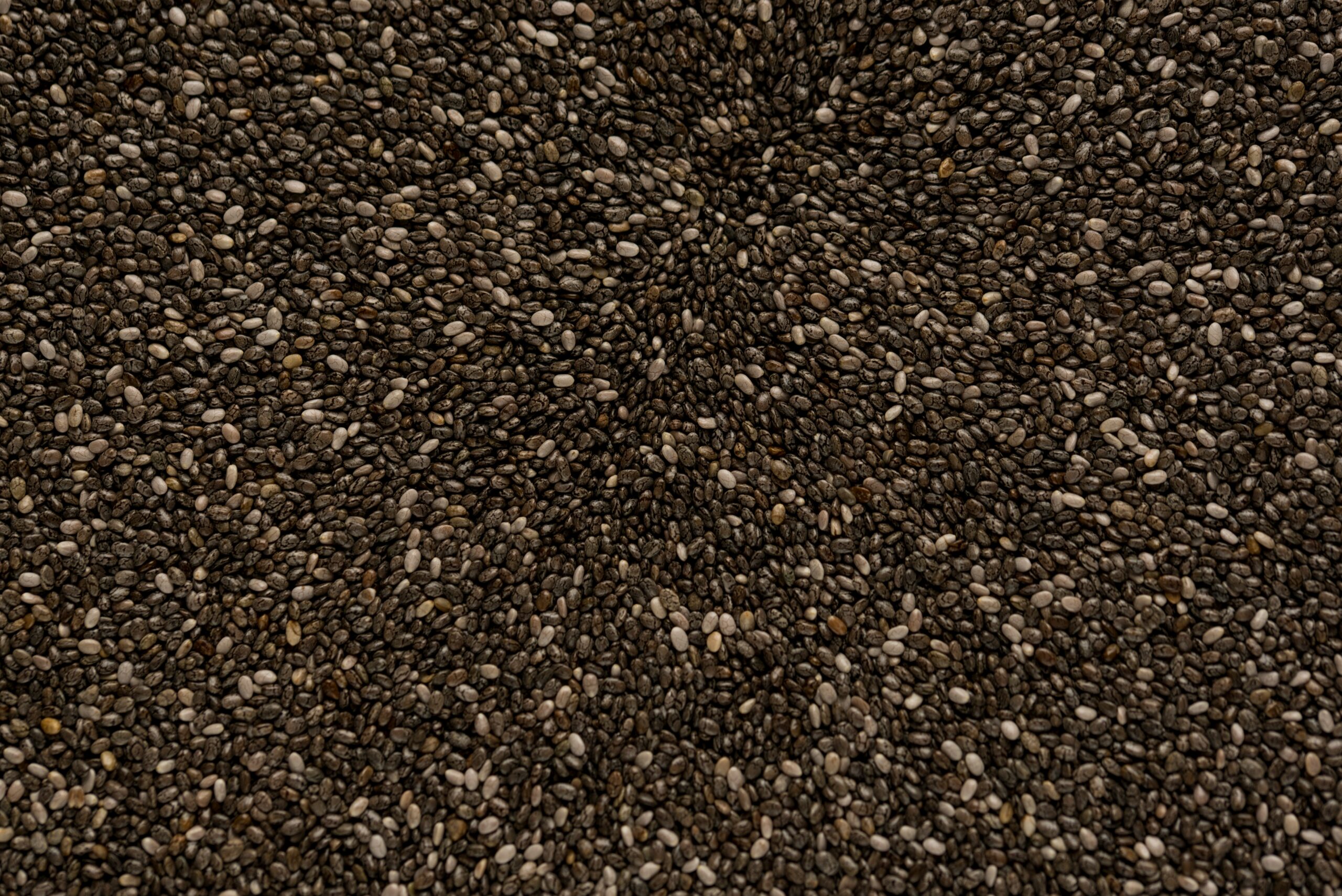
Chia (Salvia hispanica) has moved from a regional Mesoamerican staple into one of the most widely traded functional ingredients of the past two decades. Its rise has been driven less its nutrient profile: high alpha-linolenic acid content, dual soluble and insoluble fibre, a complete amino acid profile, and unusual hydration capacity, that makes it useful across very different product formats: bakery, beverages, dairy alternatives, snacks, and supplements.
1. Botanical Profile and Origin
Salvia hispanica is an annual herbaceous plant of the Lamiaceae (mint) family, native to central and southern Mexico and Guatemala. Archaeological and ethnobotanical records identify it as a staple food and ritual crop of pre-Columbian Mesoamerican civilisations, alongside maize, beans, and amaranth. The plant grows to 1-1.7 m, produces small purple or white flowers, and yields seeds of approximately 1-2 mm in length.
Two principal seed phenotypes are commercially traded: black chia (the dominant phenotype, with mottled grey-brown to black colouration) and white chia (a recessive variant cultivated for visual differentiation in pale food matrices). Compositional differences between the two are modest; both share the defining functional property of the seed: when placed in water, the outer pericarp releases mucilage, a soluble polysaccharide hydrocolloid that forms a transparent gel. Whole chia seeds typically absorb around 10-12 times their weight in water; the isolated mucilage fraction has been shown to retain up to 27 times its own weight in water under specific extraction conditions (Muñoz et al., 2012), a property that underlies its industrial use as a thickening and emulsifying agent.
Commercial production is geographically concentrated. Paraguay is the leading producer, with cultivation expanding from roughly 60,000 ha to approximately 180,000 ha over the last decade. Bolivia is the second-largest origin, with 22,635 hectares planted and 11,544 metric tonnes produced in 2024; the 2024 harvest was sharply reduced by one of the worst droughts in 30 years, with first-nine-month exports falling to 6,718 tonnes (vs 7,363 tonnes in the same period of 2023). Argentina, Mexico, and a growing Australian operation account for most of the remaining global supply, and Latin America still represents roughly 80% of total volumes.
2. Nutritional Composition
Dried · Per 100 g
Source: USDA FoodData Central SR Legacy · % DV based on FDA 2,000 kcal/day reference · Bars exceeding 100% DV are capped and shown in red
Two compositional features distinguish chia within the seeds category. First, alpha-linolenic acid accounts for approximately 60% of the total fat content, a concentration matched only by flaxseed among common whole foods. Second, the fibre content is unusually high (around 35% of total weight), and the soluble fraction (the mucilage responsible for the seed’s gelling behaviour) accounts for approximately 7-15% of total fibre, with the remaining 85-93% being insoluble cellulose-type material.
A bioavailability caveat applies. Chia contains 1.55-2.65 g of phytic acid per 100 g depending on cultivar and growing region. Phytic acid binds di- and trivalent minerals (calcium, iron, zinc, manganese), reducing their absorption. The European Food Safety Authority does not consider these levels a safety concern, and soaking, grinding, or fermenting chia partially mitigates the effect.
3. Bioactive Compounds
3.1 Alpha-linolenic acid (ALA)
Chia is among the richest plant-based whole-food sources of alpha-linolenic acid, the short-chain essential omega-3 that the body must obtain from diet. ALA serves as a precursor to long-chain omega-3 fatty acids (EPA and DHA), but the conversion is metabolically constrained. Stable-isotope tracer studies summarised by Burdge and Calder (2005) indicate that ALA-to-EPA conversion is limited in men and that further transformation to DHA is very low; fractional conversion is greater in women, possibly through an oestrogen-mediated regulatory effect. The AJCN review by Rajaram (2014) similarly concludes that ALA-rich plant sources contribute meaningfully to dietary omega-3 intake but do not substitute for direct EPA and DHA sources for individuals with elevated requirements.
3.2 Mucilage and dual-fraction fibre
The chia mucilage is a heteropolysaccharide rich in xylose, glucose, and glucuronic acid units. On hydration, it forms a hydrogel that increases viscosity, slows gastric emptying, and creates a substrate for fermentation by colonic microbiota. The remaining fibre is largely insoluble cellulose-type material with bulking and laxative effects. The combination is asymmetric approximately 85–93% insoluble and 7–15% soluble fibre, but the soluble fraction punches well above its weight functionally, since it is responsible for the distinctive hydrogel-forming behaviour and most of the documented postprandial effects on satiety and glycaemic response.
3.3 Phenolic compounds and antioxidants
Chia contains chlorogenic acid, caffeic acid, quercetin, kaempferol, and myricetin, a phenolic profile with documented in-vitro antioxidant and anti-inflammatory activity. Tocopherols (vitamin E forms), particularly γ-tocopherol, contribute additional lipid-phase antioxidant capacity, which also helps protect ALA from oxidative degradation during storage.
3.4 Plant protein quality
Chia contains all nine essential amino acids, though not in optimal proportions when compared with higher-quality reference proteins such as soy, dairy, or egg. Lysine and methionine, typically limiting in plant proteins, are present in modest but useful amounts. The protein digestibility-corrected amino acid score (PDCAAS) of chia is lower than that of soy or whey, and chia is best framed as a meaningful contributor of plant protein within a varied diet rather than a stand-alone primary protein source.
4. Evidence-Based Health Effects
The clinical literature on chia is expanding but remains heterogeneous: most randomised controlled trials are small, short (8-12 weeks), and focused on overweight or metabolically vulnerable populations. The current evidence summary below reflects findings from multiple recent meta-analyses, presented in the cautious framing the underlying evidence supports.
4.1 Cardiometabolic outcomes
Two recent meta-analyses converge on a measured signal for blood pressure and waist circumference, with effect sizes that vary by population and dosing protocol. A 2024 systematic review and meta-analysis of randomised controlled trials in overweight subjects (10 RCTs, 424 participants) found significant reductions in waist circumference (-2.82 cm), systolic blood pressure (-3.27 mmHg), and C-reactive protein (-1.18 mg/L), while changes in diastolic blood pressure, body mass index, lipid markers, and glycaemic markers were not statistically significant. A 2024 meta-analysis published in Clinical Therapeutics (8 RCTs, 372 participants) reported larger effects: weighted mean reductions of (-5.61 mmHg) in systolic blood pressure, (-7.49 mmHg) in diastolic blood pressure, and (-1.46 cm) in waist circumference, again with no significant change in body weight or BMI. Taken together, the systolic blood pressure reduction across recent meta-analyses sits in the range of approximately 3 to 6 mmHg, with diastolic findings less consistent, a reminder that effect estimates remain sensitive to study selection, dose, and population characteristics.
4.2 Glycaemic and lipid responses
A 2024 meta-regression analysis of fourteen randomised controlled trials across diabetes, blood pressure, lipids, and obesity outcomes reported direction-of-effect signals consistent with cardiometabolic benefit, but with substantial between-study heterogeneity. A 2025 umbrella review in Plant Foods for Human Nutrition graded the certainty of evidence for chia’s effects on most cardiometabolic outcomes as low to moderate, citing limited high-quality trials and inconsistent dosing protocols.
4.3 Satiety and appetite regulation
Mechanistically, the mucilage hydrogel slows gastric emptying and is plausibly linked to short-term increases in satiety. Direct human evidence is more modest: small short-duration trials report increased post-meal fullness and reduced subsequent intake, but longer trials have not consistently translated this into clinically meaningful weight change, as reflected in the meta-analyses above.
4.4 Gut and inflammatory markers
The fermentable soluble fibre fraction acts as a substrate for colonic microbiota, with mechanistic plausibility for short-chain fatty acid production and modulation of gut barrier function. Direct clinical evidence in humans remains preliminary and is largely inferred from broader high-fibre dietary literature.
5. Recommended Intake and Forms
Most clinical trials have used daily doses between 25 g and 50 g (approximately 2-4 tablespoons), administered as whole or ground seeds incorporated into food matrices. The European Commission has authorised chia seeds as a novel food under specific conditions of use, including maximum inclusion levels in defined food categories (such as bread products, breakfast cereals, and fruit/vegetable preparations) and a recommended labelling threshold for prepacked seeds intended for direct consumption.
Whole vs ground vs pre-hydrated. Whole chia seeds may pass partially undigested through the gastrointestinal tract when consumed dry, reducing the bioaccessibility of internal lipids and minerals compared with ground forms. Grinding before use improves the bioaccessibility of ALA and reduces phytic-acid-driven mineral chelation. Pre-hydration (soaking 10-15 minutes in liquid until a gel forms) is the form used in most clinical studies and is also the safest from a swallowing perspective.
6. Culinary Applications
Chia’s functional properties: neutral flavour, gelling capacity, lipid stability, make it adaptable across product formats. Common applications include:
- Chia pudding. 1 part seeds to 4-5 parts plant milk, refrigerated 4-12 hours, yields a thick set custard suitable for breakfast and dessert applications.
- Egg replacement in baking. 1 tablespoon ground chia + 3 tablespoons water, rested 5-10 minutes, replaces one egg in muffins, pancakes, and quick breads, contributing both binding and moisture retention.
- Hydration and sports drinks. The traditional Mexican preparation chia fresca (chia, water, lime, optional sweetener) is a reference application; the gel slows fluid release in vitro, although direct hydration or athletic-performance benefits in human studies remain limited.
- Bakery inclusions. Whole or cracked seeds are added to breads, crackers, and energy bars at typical rates of 3-8% of dry weight to deliver fibre and ALA without altering structure. A regulatory note: the European Food Safety Authority has flagged a potential for acrylamide formation when chia-containing foods are heat-treated above 120 °C and at low residual moisture (the conditions typical of biscuits and similar baked goods), particularly at higher chia inclusion rates (10-20% of flour). Available evidence is not yet conclusive on whether chia adds materially to the acrylamide already present in baked products, but formulators using chia flour at high inclusion levels in low-moisture bakery applications should consider the risk during product development.
- Smoothies, yogurt, and oatmeal. Stirred in directly, with a short hydration window (5+ minutes) to soften the seed coat before consumption.
- Chia oil. Cold-pressed chia oil concentrates ALA and tocopherols; it is used as a finishing oil and in supplement formulations rather than for cooking, given its sensitivity to heat and oxidation.
7. Sustainability Profile
Chia’s sustainability profile is a study in tensions: agronomically, the crop has clear environmental advantages; commercially, its supply chain carries land-use and concentration risks that procurement and product teams should be aware of.
7.1 Agronomic strengths
Chia is drought-tolerant and adapted to semi-arid conditions, with low irrigation requirements compared with most oilseed crops. It is typically grown without heavy pesticide loads, and the share of certified-organic production is notably high, approximately 65% of chia imports into the European Union in 2024 were certified organic, well above the average for staple commodity crops, with Bolivia being a particularly important origin for organic supply. As a winter rotation crop in Paraguay, chia can also support soil cover and break disease cycles between summer soybean cycles.
7.2 Land-use context: the Gran Chaco
The dominant chia-producing zone in South America overlaps the Gran Chaco, a biome that has experienced some of the highest deforestation rates in the world over the past two decades. Independent analyses identify cattle ranching and soybean expansion as the primary direct drivers of land conversion in the Paraguayan Chaco, not chia itself. Chia is most commonly cultivated as a winter rotation on land already in agricultural use. The relevant procurement risk is therefore indirect: chia produced on land previously cleared for other commodities can carry an embedded deforestation footprint that does not appear in direct land-use accounting. Paraguayan law requires landholders in the Chaco to retain 25% of forest cover, but enforcement has been documented as inconsistent.
7.3 Supply-chain concentration and emerging origins
Roughly four out of five tonnes of global chia originate from Paraguay, Bolivia, and Argentina, exposing buyers to weather-driven supply shocks: the 2022 and 2024-2025 South American droughts triggered material price increases. Diversification is underway. Australia (Western Australia, led by The Chia Co.), Mexico (the historical centre of origin, with around 8,500 ha in production), and emerging operations in Kenya, Uganda, and India are gradually expanding the geographic footprint.
8. Precautions and Contraindications
8.1 Esophageal obstruction risk with dry chia
A clinical case reported by the American College of Gastroenterology documented complete esophageal obstruction in a patient who consumed a tablespoon of dry chia seeds followed by water. The standing clinical recommendation is unambiguous: chia should always be hydrated in liquid for at least 10-15 minutes before swallowing, and individuals with a history of dysphagia, esophageal strictures, or eosinophilic esophagitis should exercise particular caution.
8.2 Fibre tolerance and hydration
A 28 g serving supplies roughly one third of the daily fibre reference value. Sudden introduction of chia in larger amounts can cause bloating, gas, or constipation if not accompanied by adequate fluid intake. Gradual introduction (starting at 1 tablespoon daily) is reasonable for individuals not accustomed to high-fibre diets.
8.3 Anticoagulant interaction (theoretical)
At intakes substantially above customary culinary levels, the high ALA content has a theoretical interaction with anticoagulant and antiplatelet medications. Documented clinical events are scarce, but individuals on warfarin or other anticoagulants who plan to consume chia daily at the higher end of clinical trial doses (≥40 g/day) should discuss with their healthcare provider.
8.4 Allergy
Chia allergy is uncommon but documented, including IgE-mediated reactions and cross-reactivity in individuals with known sensitivities to other Lamiaceae-family seeds or to certain pollens. Symptoms have ranged from mild oral allergy to anaphylaxis in isolated cases.
8.5 Pregnancy and lactation
Chia in customary culinary amounts is generally regarded as safe in pregnancy and lactation, and the fibre and ALA contributions can be useful. Specific clinical trial data in these populations remain limited, so very high intakes (above clinical-trial doses) should be discussed with a qualified clinician.
9. Conclusion
Chia earns a place in the culinary-seeds shortlist on substance rather than marketing: a uniquely concentrated whole-food source of ALA, a dual fibre profile that is functionally distinctive, a complete amino acid pattern, and accumulating, though still maturing, clinical evidence on cardiometabolic outcomes. The evidence supports a measured, integrative role in a varied diet, not a replacement for other omega-3 sources or a stand-alone intervention for any specific condition.
Chia’s drought-tolerance, organic share, and culinary versatility are clear advantages; geographic concentration and Gran Chaco land-use context are the corresponding risks to manage through origin diversification and traceability. Used hydrated, in customary amounts, and sourced with attention to provenance, chia is a useful addition to the toolkit of an organic, plant-forward diet.
Adjust your serving weight and explore nutrients per serving across macros, fatty acids, vitamins and minerals.
─────────────────────────────
This article is part of Bem Bloom’s Seeds series. All information is provided for informational purposes only. It is not a substitute for professional medical or nutritional advice. Consult a qualified healthcare professional before making significant changes to your diet.
Sources and Further Reading
- USDA FoodData Central – Seeds, chia seeds, dried (170554)
- Kulczyński et al. (2019) – The Chemical Composition and Nutritional Value of Chia Seeds: Current State of Knowledge. Nutrients (PMC6627181).
- Burdge & Calder (2005) – Conversion of α-linolenic acid to longer-chain polyunsaturated fatty acids in human adults. Reproduction Nutrition Development 45(5):581–597.
- Rajaram (2014) – Health benefits of plant-derived α-linolenic acid. American Journal of Clinical Nutrition 100(Suppl 1):443S-448S.
- Karimi et al. (2024) – Effects of chia seed supplementation on cardiometabolic health in overweight subjects: systematic review and meta-analysis of RCTs. Nutrition & Metabolism.
- Saadh et al. (2024/2025) – Effects of chia seed consumption on blood pressure and body composition: meta-analysis. Clinical Therapeutics.
- Fateh, Ahmed, Najafabadi & Moludi (2024) – The impact of Chia seeds on diabetes, blood pressure, lipid profile, and obesity indicators: meta-regression analysis of 14 RCTs. Prostaglandins & Other Lipid Mediators 175:106907.
- Al-Younis et al. (2025) – A Critical Review of the Health Benefits Associated with Chia Seeds (Salvia hispanica L.). Plant Foods for Human Nutrition (umbrella review).
- Vera-Cespedes, Muñoz, Rincón & Haros (2023) – Physico-Chemical and Nutritional Properties of Chia Seeds from Latin American Countries. Foods 12(16):3013 (PMC10453379).
- EFSA NDA Panel (2019) – Safety of chia seeds (Salvia hispanica L.) as a novel food for extended uses pursuant to Regulation (EU) 2015/2283. EFSA Journal 17(4):e05657.
- Muñoz, Cobos, Diaz & Aguilera (2012) – Chia seeds: Microstructure, mucilage extraction and hydration. Journal of Food Engineering 108(1):216-224.
- Rawl et al. (2014) – Watch It Grow: Esophageal Impaction with Chia Seeds. American College of Gastroenterology.
- European Food Information Council – Health benefits of nuts and seeds.
- European Commission – Implementing Regulation (EU) 2017/2470 (Union list of authorised novel foods).
- CBI (Centre for the Promotion of Imports) – The European market potential for chia seeds (2025).
- Tradelink International – Chia Crop Report Early 2025.
- Seedea – Chia Seeds Market Update January 2025 (Bolivia drought, exports).
- Mordor Intelligence – South America Chia Seeds Market (Bolivia 22,635 ha; 11,544 mt 2024).
- WWF – The Gran Chaco Forest.
- Henderson et al. (2021) – The Paraguayan Chaco at a crossroads: drivers of an emerging soybean frontier. Regional Environmental Change.
- IUCN NL – Tackling uncontrolled deforestation in Paraguay.
- GBIF – Salvia hispanica species record.